Wreck at Curdies Inlet

In the opening months of 1877, twenty-five-year-old William Whitfield took command of the Young Australian, a 130-ton three-masted wooden schooner. Built on the shores of Jervis Bay in 1864 and registered out of Brisbane under the ownership of Andrew Muir, she was a seasoned coaster, though by no means an easy charge. On 1 May 1877, deep in the water with 5,452 bags of sugar and 180 casks of rum from the Yengarie Sugar Refinery, she weighed anchor from Maryborough, bound for Port Adelaide.
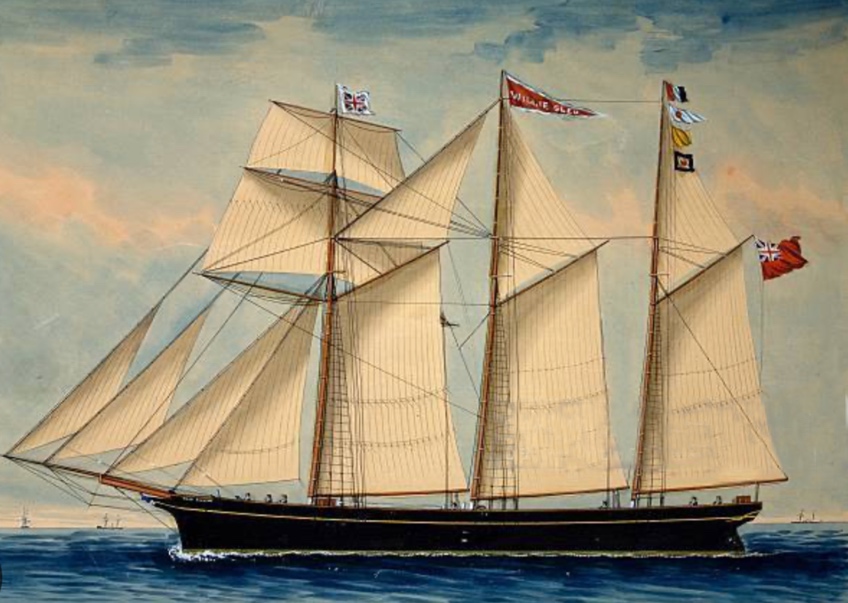
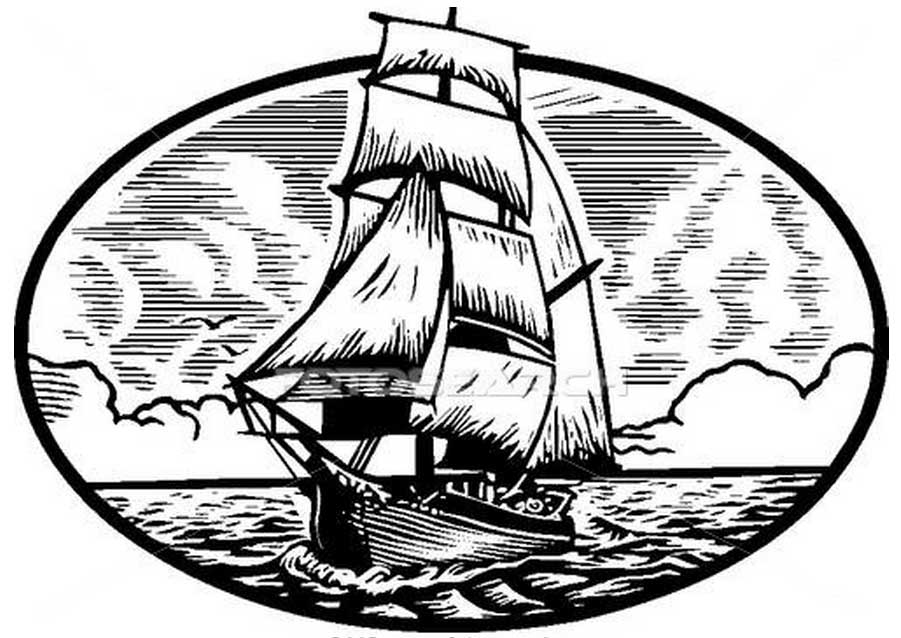
Photograph of a 19th century three-masted topsail schooner
A colonial three-masted topsail schooner similar in rig to the ‘Young Australian’.

William’s crew reflected the typical polyglot waterfront of colonial Australia: his mate, James Ryans, was a twenty-eight-year-old Scot; his able seamen included Peter Frazer, another Scotsman, and two German mariners, one of whom was thirty-eight-year-old Prussian Frederic Mittay. From the outset, the vessel proved deficient. Caught in a vicious south-easterly blow shortly after clearing Moreton Bay, the schooner sustained severe damage aloft. William was forced to bring her into Port Jackson in distress, where he paid off his Belfast-born cook, Francis Wilson, and shipped William Eltham in his stead.

Having effected makeshift repairs on limited credit, William cleared Sydney Heads on 17 May, running south into the teeth of an impending Southern Ocean gale. By the time the vessel rounded Cape Otway and approached Cape Nelson, near the South Australian border, conditions were appalling. In 1877, the towering stone beacon at Cape Nelson was still two years away from being surveyed; on that pitch-black night, with blinding squalls obliterating all visibility, the crew had no landmark to steer by. Failing to make shelter in Portland, the vessel was struck by an immense sea that nearly drove her down sternmost. Her foremast was sprung, her rigging crippled, and William was forced to turn east and run before the wind, desperately cutting away fouled lines to prevent the spars from beating through the hull.

Compounding the peril, William possessed no chronometer on board. He was compelled to navigate by dead reckoning alone—a perilous venture on a shore where current and leeway could fling a vessel miles off course. More than seven hundred vessels lie broken along the Shipwreck Coast between Moonlight Head and Port Fairy; Matthew Flinders had soberly recorded decades earlier that he had never surveyed ‘a more fearful section of coastline’.
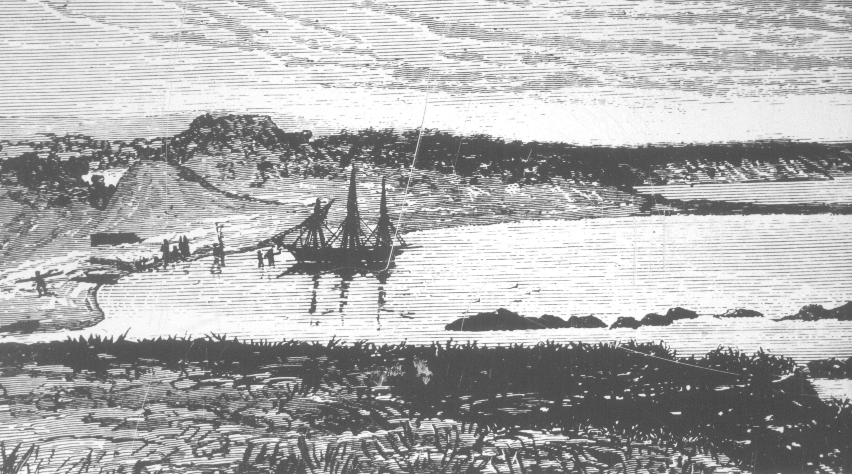
Contemporary engraving from The Australian Sketcher showing the wreck of the Young Australian on the rocks
The wreck of the three-masted schooner ‘Young Australian’ at Curdies Inlet, Victoria, 28 May 1877. From The Australian Sketcher, July 1877.

By 27 May, driven relentlessly toward the cliffs near Curdies Inlet, William faced imminent destruction. In a display of extraordinary nerve, the young captain clambered high into the swaying, damaged rigging. From his precarious perch aloft, shouting orders down through the gale, he conned the helmsman through an intricate, boiling channel in the outer reef—the very reef that had claimed James Baines’s celebrated clipper Schomberg in 1855.

Though he threaded the reef, the schooner was trapped in the breakers. Grounding two hundred yards off the mouth of the inlet, the ship shuddered violently under the rollers. In the frantic attempt to secure a lifeline to the shore, helmsman William Eltham was swept away by the undertow and drowned; his body was never recovered. Guided by six or seven local settlers who had hurried to the beach, the remaining crew hauled themselves through the surf along a line. True to the traditions of the merchant service, William Whitfield was the last man to abandon the ship, stepping off only when her hold was flooded and her hull irrevocably settled into the sands.

William camped beside the wreck until insurance assessors arrived, overseeing the salvage and subsequent auction by Greig & Murray in Melbourne: 138 hogsheads and 42 casks of Queensland rum, along with 5,600 mats of saturated sugar, against an insured hull value of £2,000. He then travelled to Melbourne aboard the coastal steamer Otway to face the Melbourne Steam Navigation Board at the Custom House.

Public opinion was initially firmly in his favour. The Warrnambool Standard remarked admiringly that ‘in directing that the vessel should be steered for a narrow opening in the reef, the captain, who directed the steering from the rigging, showed coolness and judgement, otherwise his own life and those of his men would doubtless have been sacrificed.’ Yet the Marine Board took a harder line, charging Whitfield with a wrongful act in proceeding to sea knowing the vessel possessed defective gear and insufficient equipment.

Facing the ruin of his career and the suspension of his master’s certificate, William pleaded penury: he had telegraphed Andrew Muir in Brisbane repeatedly for funds to refit the vessel properly, but had received nothing. On 23 June 1877, his solicitor, Mr Stewart, launched a devastating legal assault on the proceedings. Stewart demonstrated that because the English Merchant Shipping Act amendments championed by Samuel Plimsoll had not yet been enacted into Victorian colonial statute, the Marine Board possessed no jurisdiction to hold a master criminally liable for unseaworthy conditions imposed upon him by distant, parsimonious owners.

The bench had no answer. Within fifteen minutes, the court conceded the point of law, exonerated Captain Whitfield, and returned his certificate. The outcome triggered blistering editorials in The Age and the Port Phillip Herald, condemning colonial legislative inertia that permitted ‘coffin ships’ to sail with impunity. For William Whitfield, exoneration was an essential professional vindication, yet the memory of Curdies Inlet—and the drowned helmsman he could not save—would remain an indelible shadow across his seafaring career.
The Barepot Mariner

On 18 April 1851, in the humble settlement of Barepot—an industrial village nestled beside the Seaton Iron Works on the banks of Cumberland’s River Derwent—Mary Whitfield, née Beeby, gave birth to her son William. Her husband, John Whitfield, registered the birth at Cockermouth on 6 May, recording his occupation simply as ‘labourer’. Two months later, on 22 June, the infant was carried to the ancient parish church of Saint Michael in Workington for baptism. With ten children beneath their roof, John and Mary Whitfield endured a crowded, hardscrabble existence, yet several of their brood attained a commendable standard of literacy. For young William, that early schooling would later prove indispensable when navigating the responsibilities of a master mariner.

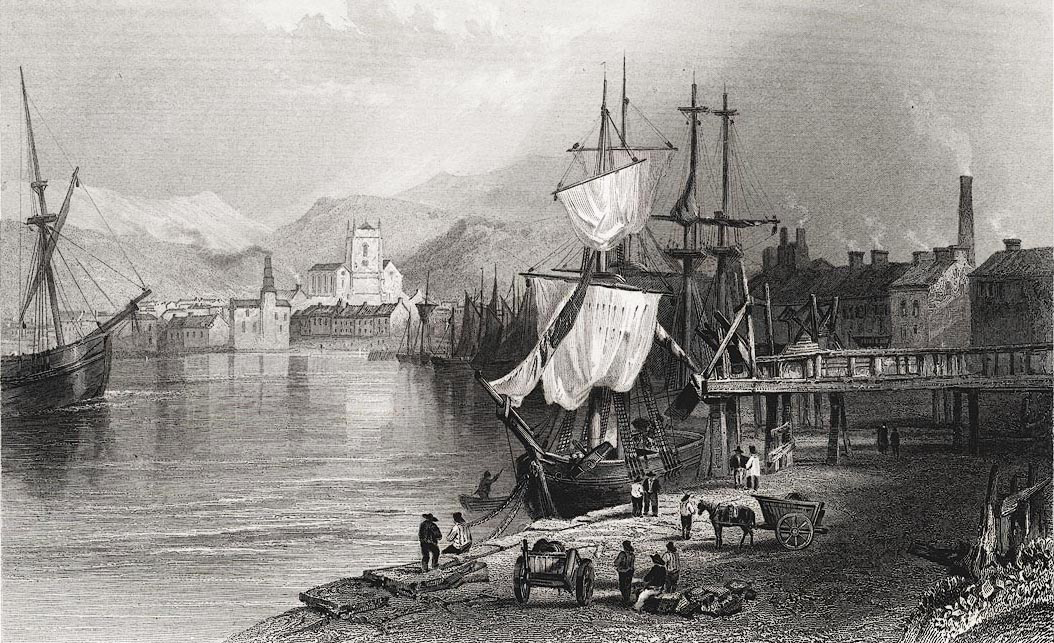
1840s engraving of Workington Harbour by W. H. Bartlett
Workington Harbour in the 1840s showing the docks, coal loader, and St Michael’s Church. Engraving by W. H. Bartlett.

Domestic security proved fleeting. In January 1854, when William was not quite three years old, his mother died. The loss reverberated through the boy’s entire life. Decades later, a medical clerk recording his physical description noted a poignant emblem indelibly pricked into the skin of his forearm: a tomb sheltered by a drooping willow, bearing the inscription ‘In Memory of my Mother’ (Sculcoates Asylum Records, Case History No. 2928, Hull Archives). For a motherless toddler growing up in Barepot, grief was accompanied by acute privation as John Whitfield struggled to raise the surviving children alone.

Misfortune fell upon the family in cruel succession. Within two years of Mary’s passing, two of William’s sisters drowned in separate tragedies. Then, in 1861, John Whitfield suffered a fatal industrial accident at the iron works. At just nine years old, William was an orphan, cast upon the kindness and resources of his eldest brother, James Whitfield.

James had recently returned to Workington after trying his luck with considerable success on the Victorian goldfields during the 1850s. Enterprising and astute, James stepped forward as the family’s anchor, providing financial support and guidance to his younger siblings. His colourful accounts of life at the antipodes must have cast a long shadow over young William’s imagination. Yet survival in Workington demanded immediate labour. The Seaton Iron Works had closed its furnaces when William was eight, driving local workers downriver toward the expanding harbour, scarcely a mile from Barepot. Through the maritime connections of James’s father-in-law, a local mariner named James Brown, young William likely secured a berth as an ordinary seaman in the brisk coastal coal and iron trade.

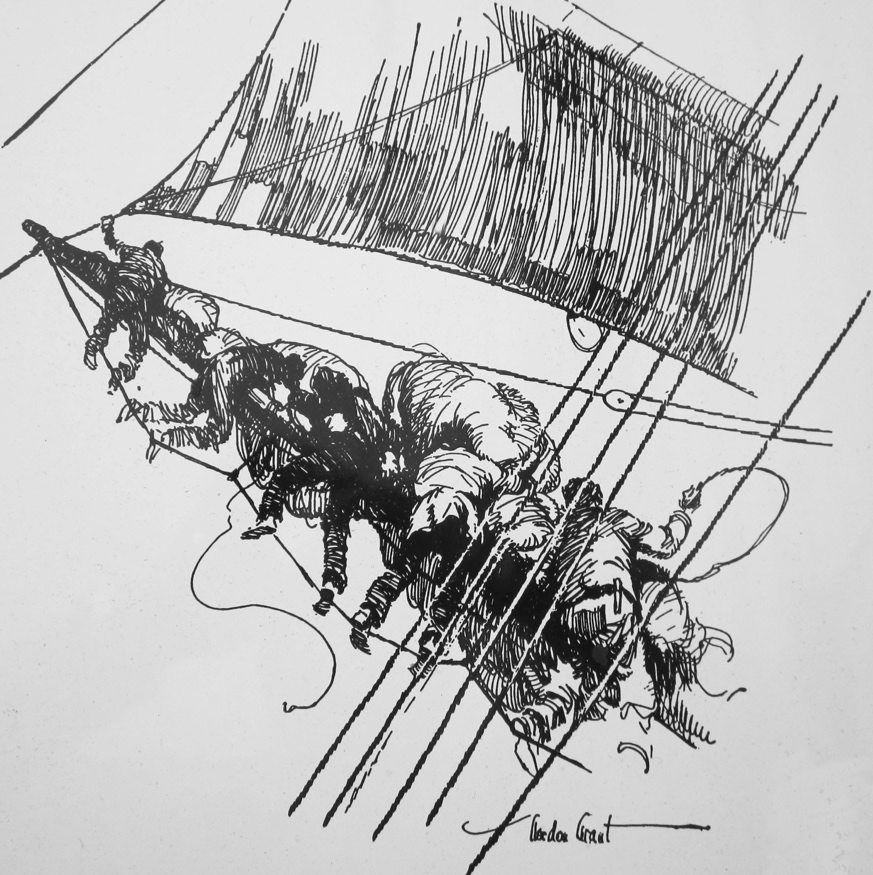
Historic sketch of sailors working aloft on the yardarms
Manning the sails on the yardarms in heavy seas—perilous daily work for young ordinary seamen.

Victorian merchant seafaring was a profession shorn of romance. While landsmen marveled at the symmetry and grace of tall ships under full canvas, life before the mast was squalid, precarious, and exhausting. Quarters in the forecastle were cramped and perpetually damp; weary hands snatched brief watches below, sleeping fully clothed in wet oilskins upon sodden straw mattresses. On deck, youths were driven aloft in biting gales to fist canvas on icy yardarms, ever mindful of shifting coal cargoes, dismasting, rogue swells, and intemperate skippers. The rations were notoriously foul—weevily hardtack and brined salt beef—and wages offered scant reward for constant physical jeopardy.

Yet for a boy with few prospects in industrial Cumberland, the sea was an avenue to the wider world. Following his brother’s footsteps, William eventually engaged on an ocean-going vessel bound for the Australian colonies. When his nephew Joseph John Whitfield provided evidence following William’s death in 1894, he recalled that his uncle had lived in Australia for ’28 years’—placing his arrival on colonial shores around 1866. Just fifteen years old, the Barepot orphan stepped ashore beneath southern skies, embarking upon a long and turbulent career on Australian waters.

Before the Mast

Our sailor ancestors spent many years before the mast but two escaped the cramped forecastle quarters of the common sailors, weathered the storms on many a sea and became master mariners. Findlay Duthie learnt the ropes from 16 years of age in Aberdeen. He became a Mate, sailed with his Master Mariner brother in their ship ‘Gem’ in the foreign trade from 1851, mainly to Spain and Mediterranean ports then to Melbourne in 1853.  Findlay commanded ‘Gem’ and other ships in the coastal trade, avoiding Davy Jones’ locker with only one minor incident to discredit him, unlike William Whitfield who on occasions was reprimanded by the Marine Board. The first occasion, when he was 26, brought him no penalty and in fact his competence and bravery saved all but one of his crew when ‘Young Australia’ was wrecked near Port Campbell, Victoria in 1877. Working mainly on the Queensland Coast as a Master Mariner, William knew the treacherous inner passage well. He was a pilot at Port Curtis and the Torres Straits and despite liking his grog, expertly sailed tiny pearling luggers to Thursday Island for the pearling industry. But grounding a steamship at Townsville took the wind out of his sails and finished William’s maritime career. John Montgomery, from Londonderry in Ireland then Irvine in Ayrshire, Scotland, went to sea as a young boy and became a signaller on ships which took him to Australia. He liked what he saw and eventually brought his family to Newcastle from Scotland in 1886, and while never a land lubber, forsook the sea and became a railway signaller.

Soldiers of the Queen

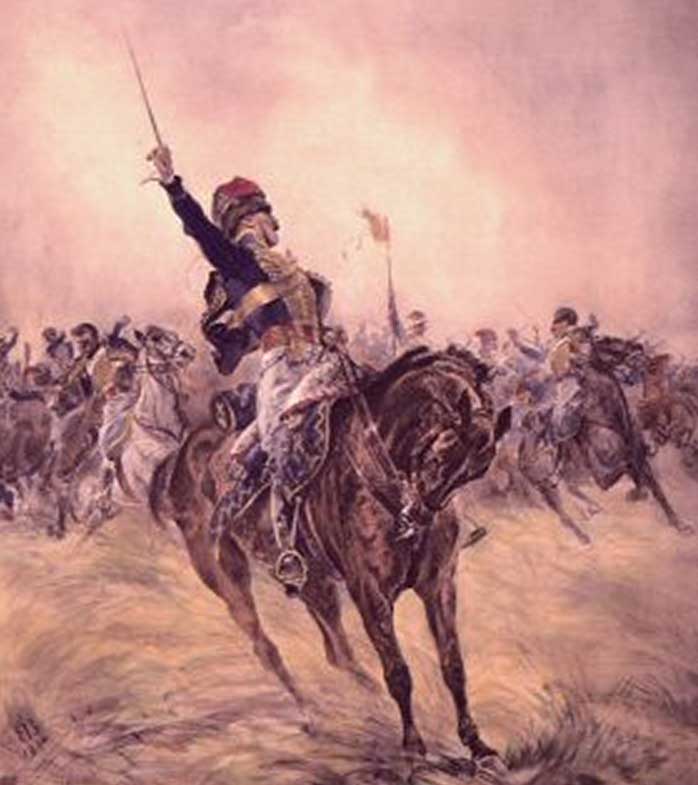
10th Hussars at Waterloo

Our ancestors have played their part in every major British conflict for over two centuries. Loyalty to Queen and Empire throughout Queen Victoria’s 63 year reign is evident, particularly in several rural families with northern Irish roots. Predating that period, John Fowler was a professional soldier enlisting in the 10th Royal Hussars, the ‘Prince of Wales Own’ at Leeds, Yorkshire in 1802. He rose to Sergeant Major, serving in England, Ireland and on the Continent through the war with France, specifically in the Peninsula Wars and at the Battle of Waterloo under the Duke of Wellington. Having served under two Hanoverian kings, George 111 and the Prince Regent, later George 1v, he retired in 1826 but trained reservists at Harwood. Edmund Childs also served in the British Army in the same period, enlisting in Ireland in 1806, fighting in the major battles of the Peninsula Wars between 1808 and 1814 as well as at New Orleans and was discharged in 1821. He then married and reared his family in Newtownards, County Down. Archibald McCallum, brother of John McCallum in Mittagong, was also a professional soldier. After enlisting in the 42nd Royal Highlanders Regiment at Glasgow about 1831 he served in Ireland, Corfu, Malta, Bermuda, Scotland, England and in the Crimean War. As a sergeant, he was a drill master at Alyth before retiring in 1861.

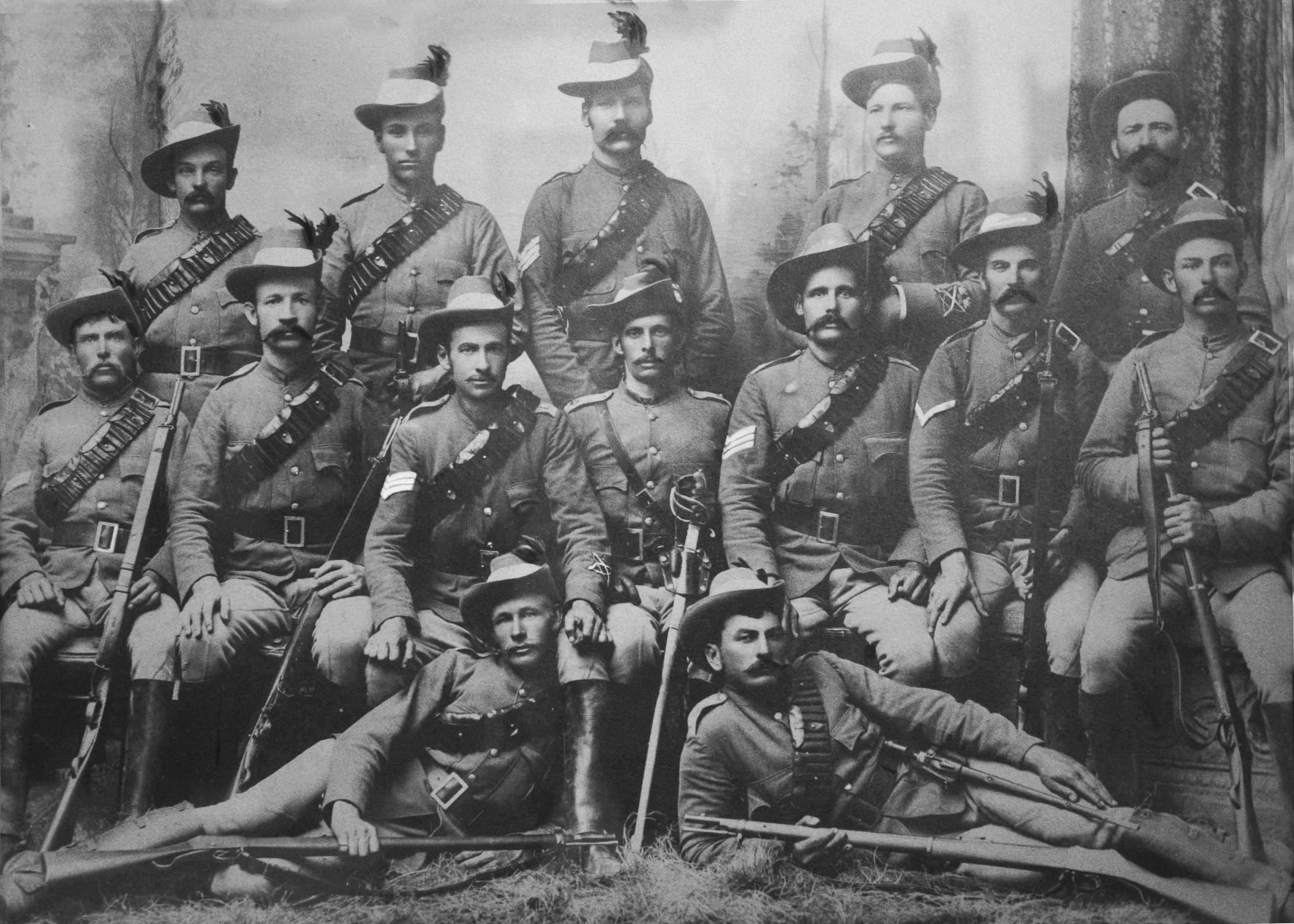
Adam & David McAllister, Archie Campbell, J F Thomas & others, Hutton Shield winners Randwick 1893

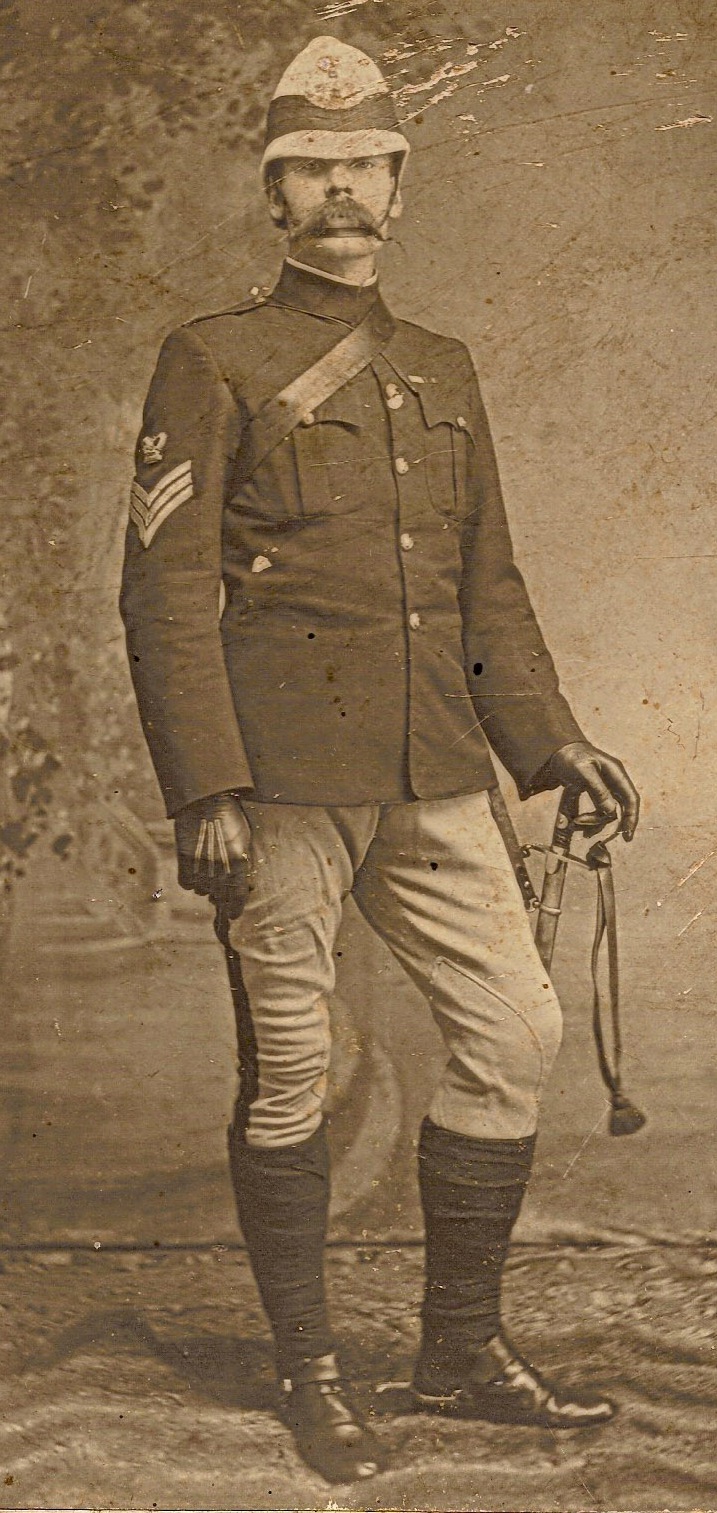
Our first Australian soldier was Edward Scrivener, a member of the NSW Volunteer Corps (Artillery) from 1855. Hugh Gilmore Campbell, his brother Archibald Campbell and brother-in-law Adam McAllister enlisted in Harry Chauvel’s Upper Clarence Light Horse at Tabulum in 1885. The Campbell and McAllister boys then trained under J F Thomas (later solicitor for Breaker Morant) at Tenterfield and competed in military events with distinction. Adam McAllister and Archibald Campbell travelled to England for Queen Victoria’s Diamond Jubilee celebrations in 1898 and were her personal bodyguards in the procession through London, Adam being one of 10 from NSW presented to Queen Victoria at Windsor Castle. Adam and his brother David McAllister served in the Boer War and both families were represented in the 1st AIF serving at Gallipoli, in the desert war and on the battlefields of France. By then a professional soldier and promoted to Major, Adam McAllister died from wounds in Palestine in 1917. His nephew David Henry McAllister died in France in 1917.

Adam McAllister 1890

Of the 17 Campbells and McAllisters who enlisted in the First World War, seven were killed and a further six young men were wounded and maimed. Hugh Campbell’s son Warren McAllister Campbell died of disease at Gallipoli,  his cousins Archibald McPherson and  Henry Campbell Harper  died in France as did his nephews Thomas Campbell and Hampton Willis. Other family members who enlisted in World War One were Oswald Adam  and  Alex Montgomery from Newcastle, Harold Childs who served in the Light Horse in Palestine and brothers  Hector Archibald McCallum and Lindsay Stuart McCallum from Mittagong as well as their cousin John Archibald McCallum. The McCallum boys all served on the Western Front. Hector and Lindsay were killed in action. The next generation served in volunteer militias and in World War Two in great numbers, some also serving in Korea and Vietnam. One who served with great distinction was Mary Ann Adams’  great nephew Major Rex Blow, ‘one of the Australian Army’s most daring and colourful heroes of World War 11’. William Bruce McAllister was a prisoner of war in Thailand for three and a half years.

Ernest Blow takes the flag, Nowra Post Office 1915

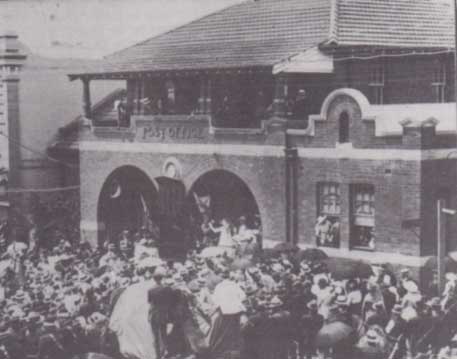
In 1915, Mary Ann Adams’ cousin Ernest Blow of Kiama led the famous Waratah recruitment march from Nowra to Sydney. Like the Campbells and McAllisters, Ernest was a Light Horse soldier. He joined the Illawarra Light Horse in the 1890s, the Berry Half Squadron of the NSW Lancers in 1897, trained in England and from there his regiment went to the Boer War, the first overseas troops to reach Cape Town. Ernest was promoted to Captain. Back on the South Coast he was area officer in charge of cadets between Milton and Helensburgh. In 1915 he was in charge of recruitment  and as a result led the Waratah March.

Gold Diggers

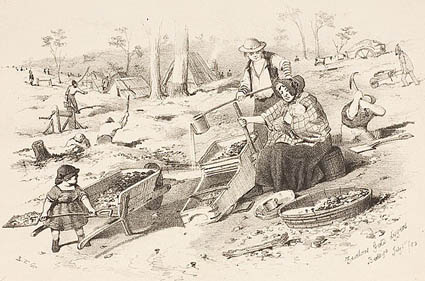
Thomas Holmes suffered from gold fever. Taking his young family from Hexham, NSW to California in 1849 proved a trial and a disappointment. On his return, he soon headed for the new goldfields in Victoria  with no more luck, unlike James Whitfield who arrived from Workington, England in 1857 and made a small fortune. It provided the nucleus of his future wealth from his Workington enterprises. Cephus Scrivener made enough money from the Victorian diggings to travel round the world in style but gold fever took him to Thames, New Zealand and cost him the life of his wife and first son.

Men at Work

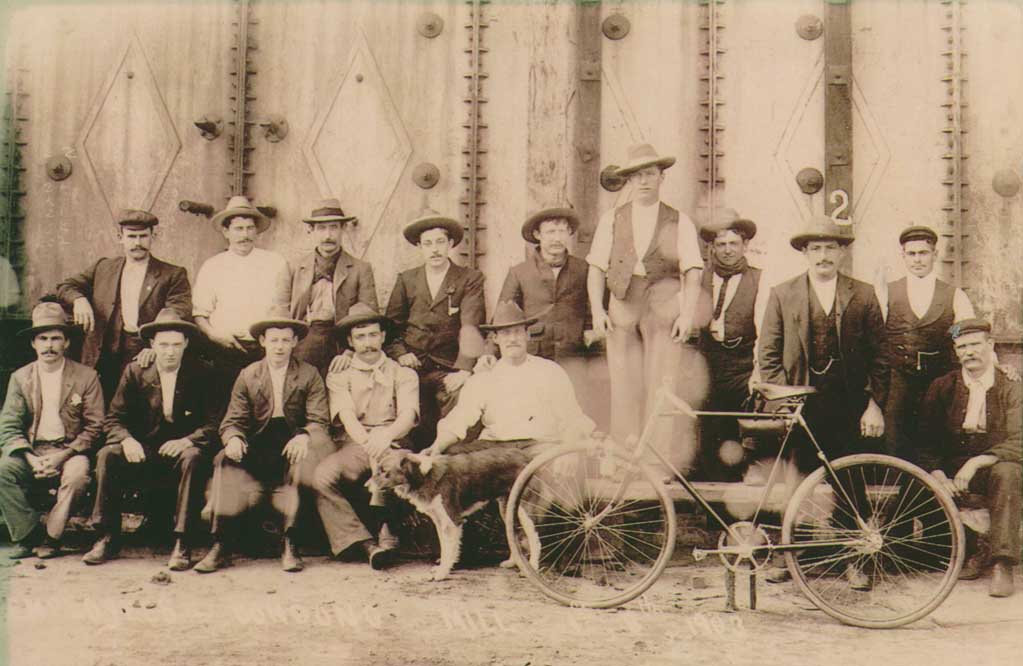
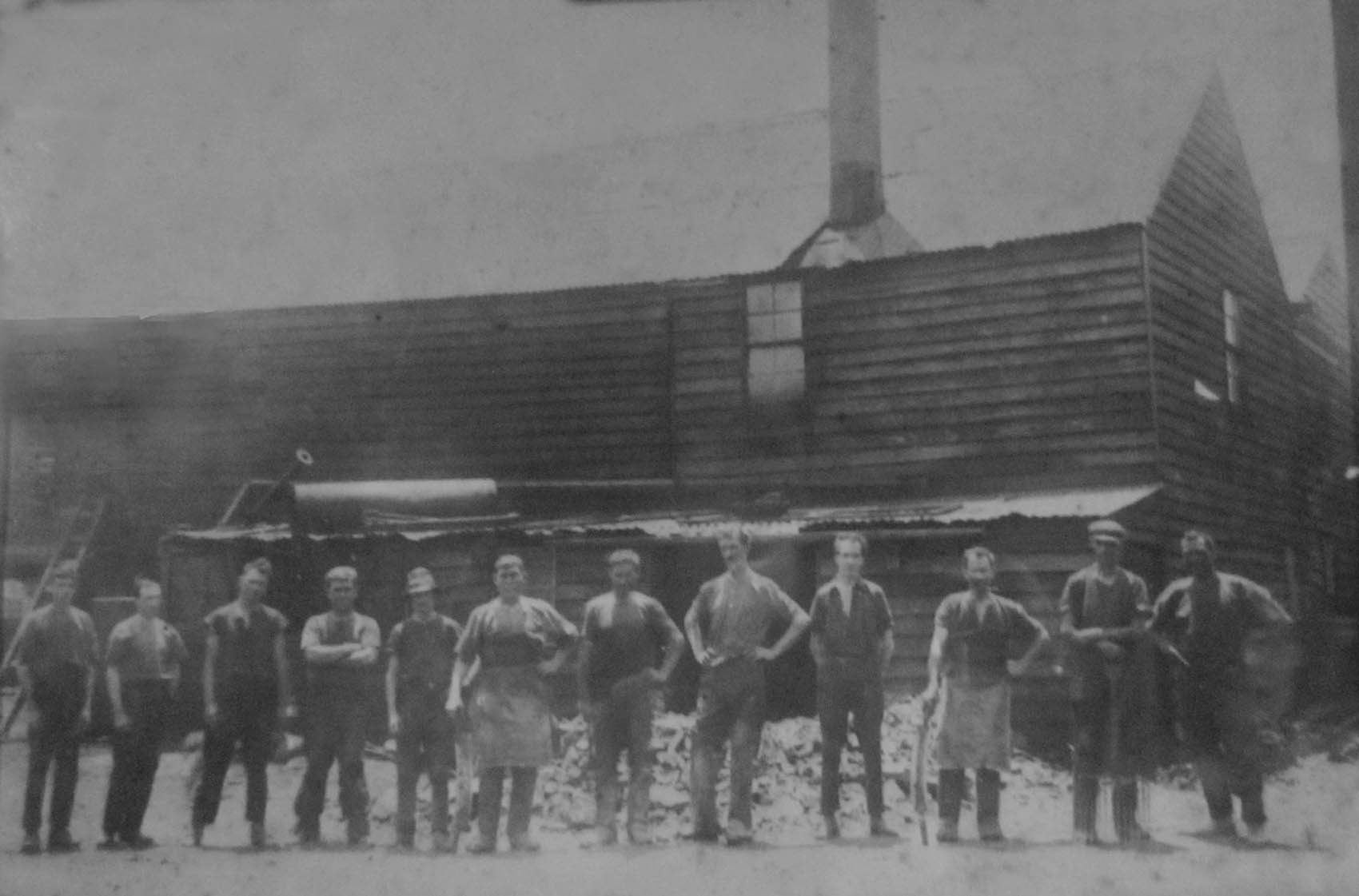
Albert Adams & workers, Condong Sugar Mill
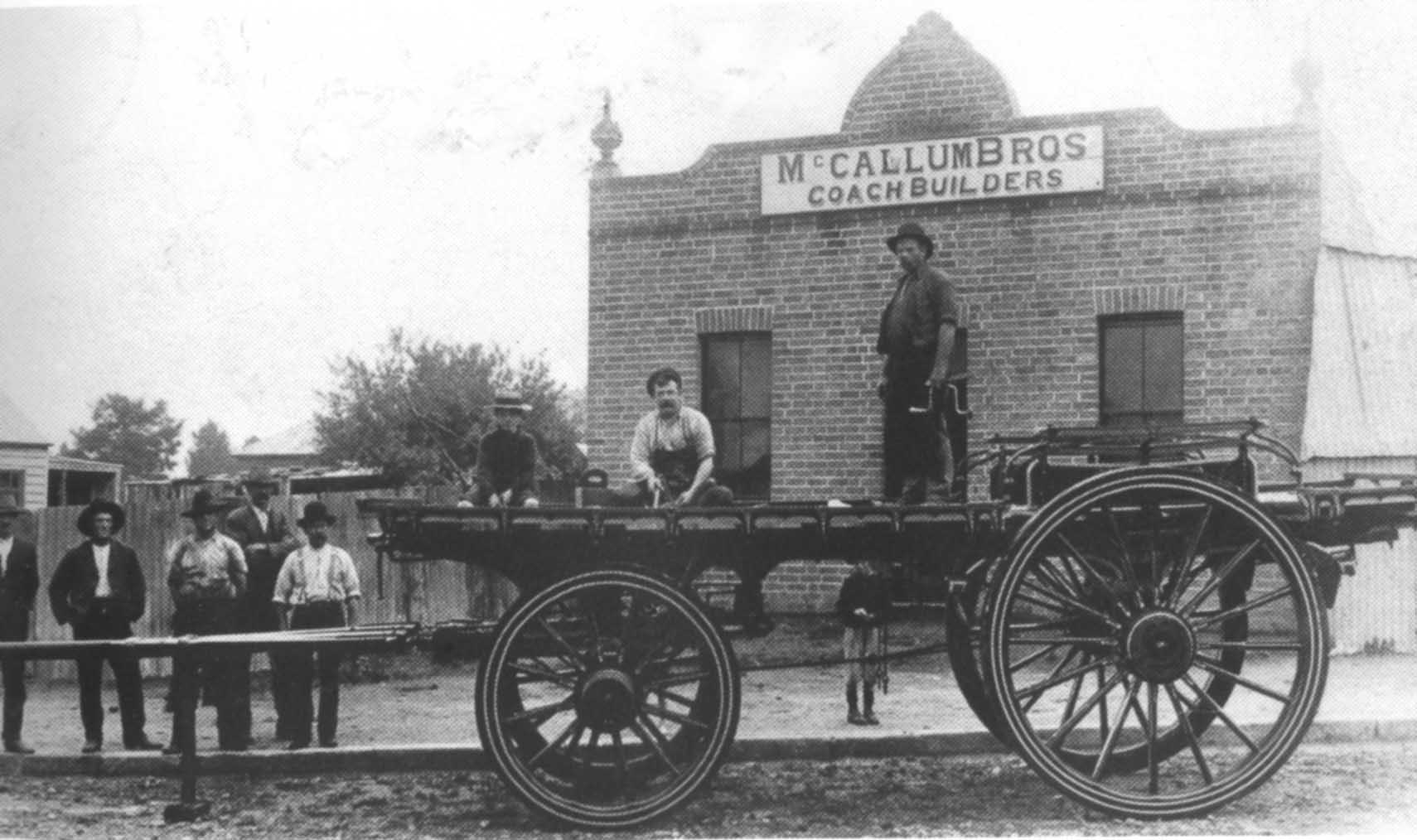
The McCallum Coach Factory Mittagong


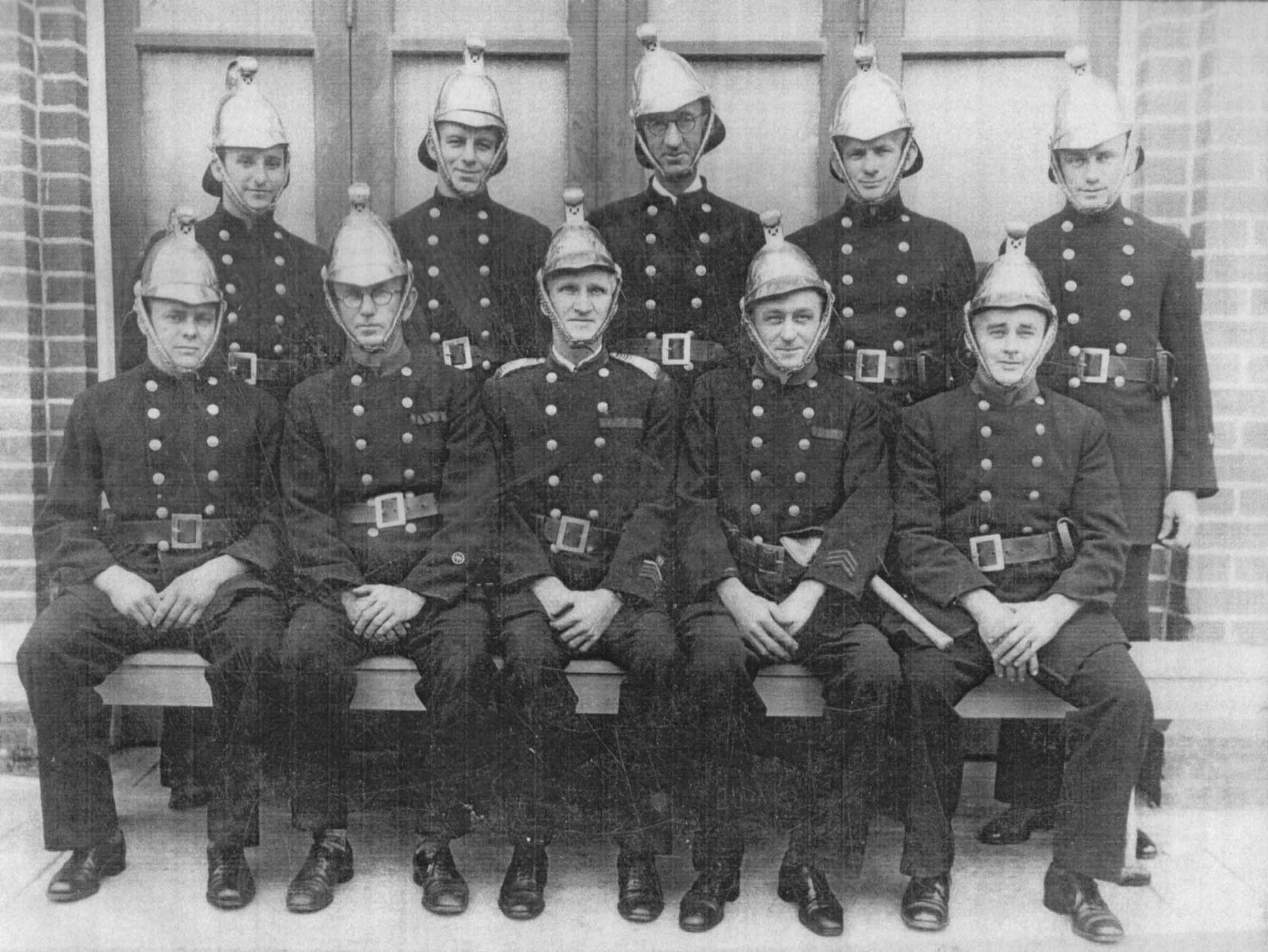
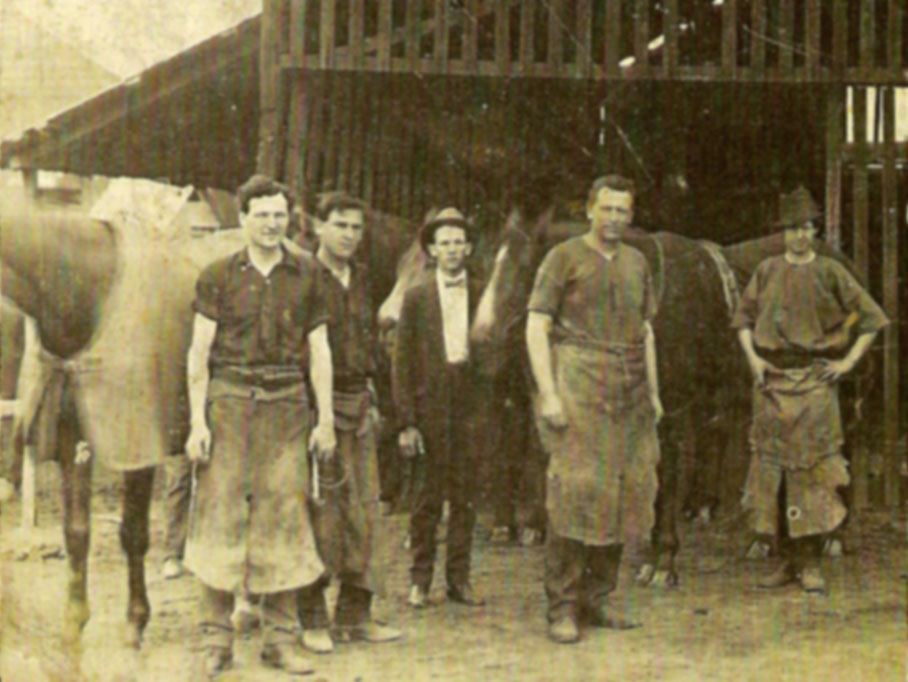
Pride is evident in these early 20th C   photos taken in the workplace in rural NSW and at Botany in Sydney

The Chegwyn tannery at Botany
Charles Scrivener Fire Captain Murwillumbah
Charles Scrivener, blacksmith Murwillumbah

Moving the Goods

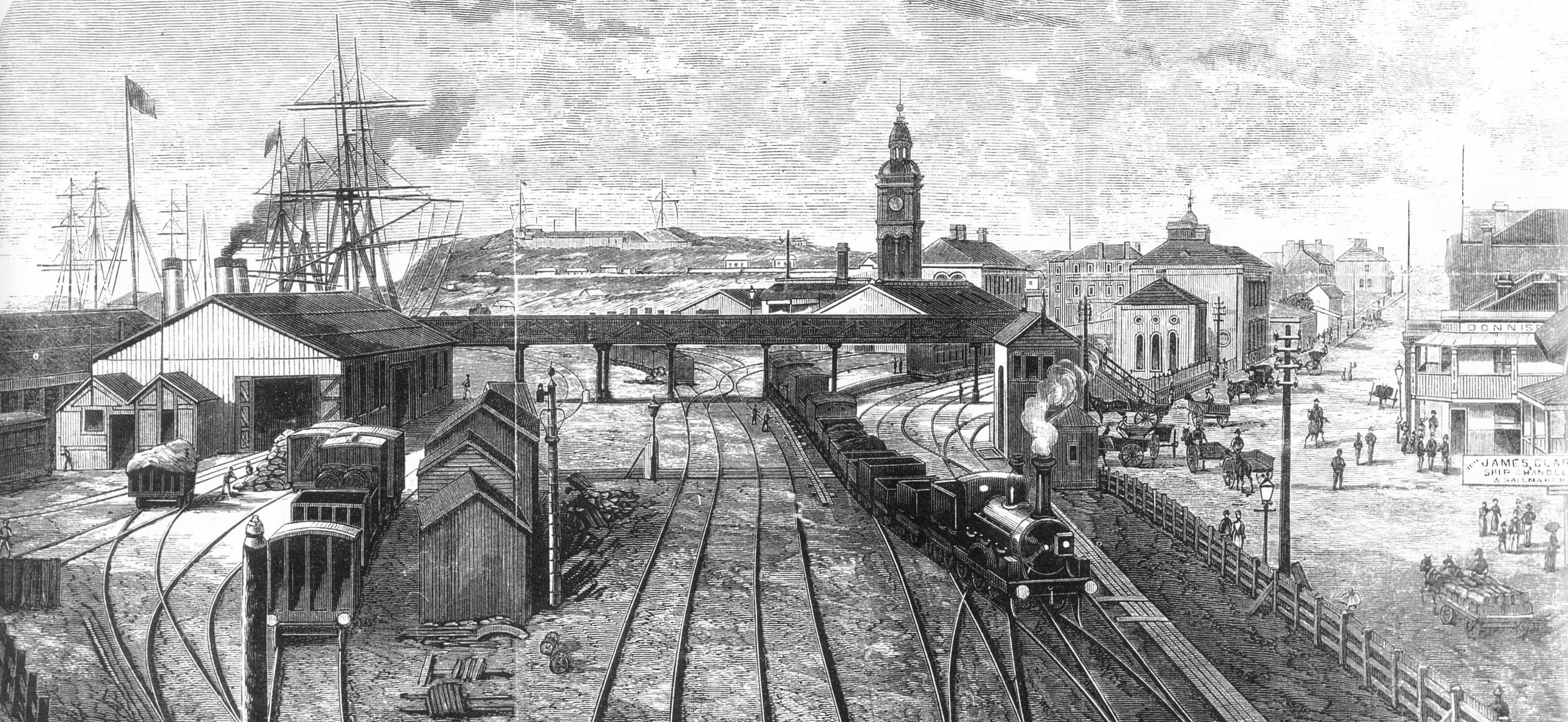
Sailing ships, railway and vehicular traffic at Newcastle NSW

At the core of any economic system is the transfer of goods and availability of labour. Our ancestors played their part in developing colonial Australia where great distances and difficult terrain limited apparent boundless opportunities. Duthie, Whitfield and Montgomery ancestors sailed and piloted ships which carried goods to Australia and in the coastal trade. Some constructed vessels in Newcastle and Port Melbourne and several ran vehicular ferries on major rivers. In the vital railway industry, Childs, Rumble, Adam, Boyd, Adams, Whitfield, Campbell and Scrivener  men laid the iron rails, drove the locomotives, were engineers in railway workshops, carriage builders, guards, signallers, station masters and worked in the Enfield and Darling Harbour goods yards as well as locomotive construction (such as 3801) at Everleigh in Sydney. The McCallums built the drays and other horse drawn vehicles that connected people with the railways and ports. Campbells and McAllisters were carriers in the horse drawn transport era in Queensland and northern NSW. Men of the McCallum, Scrivener and Campbell families, shod horses and manufactured goods and vital components for vehicles. All contributed to the national as well as their local economies.

Scottish Forbears

Archibald G McCallum

Economic and social conditions led our Scottish forbears to join the mass exodus of Scots in the 19th century, mostly as families but sometimes alone. Influenced by the promises of John Dunmore Lang, some were assisted migrants; others made their own way. For some, the decision to migrate brought security and even wealth; for others at least improved circumstances despite their constant struggles. With them came their Scottish heritage.

First to leave in 1838 was a lowlander, Thomas Adam,  a well educated cabinet maker, who could see no future in Kilmarnock where opportunities for his class were rare.  A number of ancestors left Scotland in the 1850s, some escaping the slums of Glasgow and Paisley after they moved there to work in industries.  They include a coach builder from Argyllshire, John McCallum, his wife Ann McArthur,  their three children (1860), Archibald Campbell and his wife Mary Elliott (1855) as well as his parents Hugh Campbell and Ellen Gilmore (1863). The Campbells had left their agricultural life in County Tyrone to work in the Paisley cotton mills. They were not the only ancestors from Ulster who identified as Scots in NSW. John McAllister and Jennett White (1856) from County Antrim, like the Campbells, became pioneers near Tenterfield;  William Adams and Mary Ann McIntyre hailed from Donegal (1838).

John Montgomery

Findlay Duthie, a Scottish mariner from Aberdeen, sailed to Melbourne with his brother on their ship ‘Gem’ (1853). The last of the Scottish ancestors to arrive were  a mariner John Montgomery, his wife Sarah Stevenson (1885) who also saw the promise of a better life for their four children than they had experienced. David Stevenson, a coal miner in the impoverished towns of Ayrshire died young, leaving Sarah’s mother Sarah Stobo, struggling to support her daughters as a muslin sewer in Irvine.

Red Gold

Benjamin Edwards

Australian red cedar was abundant in the sub tropical rainforests of northern NSW. Used in grand homes as a building material and for colonial furniture, the beautiful timber was gold for the early Richmond River cedar cutters such as Benjamin Edwards. Having left the cotton mills of Bristol and worked as a stockman, Benjamin turned to the more lucrative cedar trade, earning enough to purchase the first block of land sold at Lismore in 1856 and later, land at Gundurimba. Findlay Duthie, master of the schooner ‘Gem’, transported cedar, possibly even timber cut by Benjamin, to Sydney and Melbourne from the Richmond River from 1855, one consignment amounting to 58 000 feet of cedar logs.  William Whitfield in command of ‘Scout’, carried timber from the Tweed, Richmond and Brunswick Rivers to the South Brisbane Sawmill in the late 1880s.

Accidental Deaths

John Adams
Mary Ann Adams

Jane and Margaret, two sisters of William Whitfield drowned in the Derwent River at Workington, England in 1854 and 1856. John Rumble, working on constructing the  new railway line between Liverpool and Campbelltown, died in an horrific accident in 1858. A railway worker failed to signal an approaching train. Two trucks were derailed and with a load of sleepers, John fell to his death. Mary Ann Adams (nee McIntyre) fell into the kitchen fire while boiling water for tea at her Cambewarra home in 1870.  Her son John Adams was killed when a winch handle struck his head after a CSR barge fouled the line of the ferry he was operating on the Richmond River near the Broadwater Mill. Other accidents were prolific and even serious but not fatal.