Education Counts

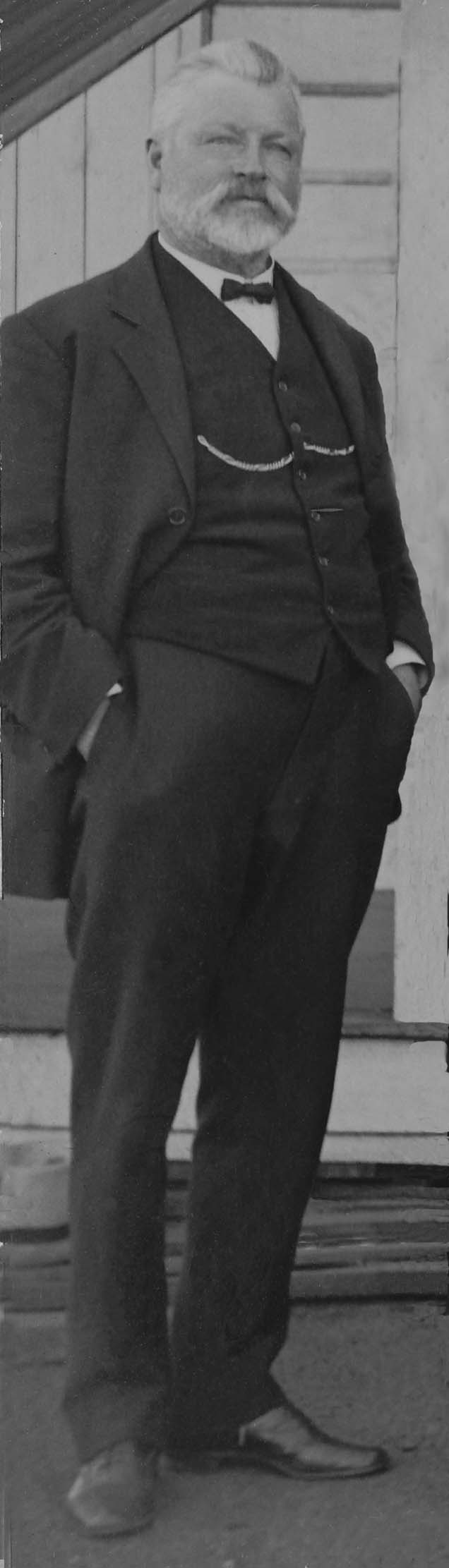
Frederick Scrivener

Employment 0ptions for children of the working class  or even skilled tradesmen, plagued by economic downturns or financial failure, were limited until after World War Two. Even with means, education was rudimentary, especially in rural areas. Just a few in ‘the canopy’ were educated at city high schools and had better opportunites. Frederick Scrivener, benefiting from his education at Fort Street in the 1860s, was able to contribute to his local community near Lismore. John Archibald McCallum attended Sydney Boys High School and Sydney Teachers’ College (1912), gained a BA degree at Sydney University (1921), won a university medal in history, became a lecturer and broadcaster then moved to a political career as a writer, State President of the ALP (1931), foundation member of the Liberal Party (1944) and Senator for NSW (1950). Ted Whitfield, son of John McCallum’s cousin John McCallum Whitfield did his Leaving Certificate at Canterbury Boys’ High School where John McCallum was a teacher, studied Arts and Law at Sydney University  in the 1930s and pursued a notable public service career as a barrister, member of the Public Service Board, Industrial Registrar and Commissioner for Water Conservation and Irrigation.
Cricketers

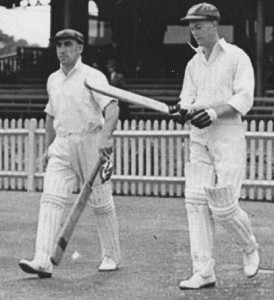
Jack Chegwyn and W.A. Brown, Combined NSW Cricket Clubs’ Team versus GPS XI, Sydney Cricket Ground 1934
Inevitably, given Australians’ love of the game, their are some enthusiastic and notable cricketers in the ranks. Jack Chegwyn had a  proud record, making 11 943 runs and 20 centuries for Randwick and the NSW team and was for a time  Randwick’s first grade captain. He is also renowned for his voluntary work in cricket promotion and discovering talent such as Doug Walters in 1962. Bruce Francis  made his Test debut against England at Manchester in 1972. He went on to be a hard hitting opening bat for Essex, the County from which his Rumble ancestors migrated in 1857.  He was a key mover in the establishment of World Series Cricket in 1977 and the rebel Australian tour to South Africa in 1984-1985. The Rainbow family achieved fame in the Fairfield district. William Rainbow was a prominent athlete in his early days and practised cricket with Charles Bannerman who played in the first test match in 1882. William and four of his five sons played with distinction in the Wetherill Park A Grade team  winning many a match. The family also produced tennis players who have excelled over generations. David Childs, a keen first grade cricketer and cousin of the Rainbow boys passed on his skills to his grandson Bryan Preen who went on to play first grade cricket. Many other individuals in the Adam, Bowden, Adams, Campbell, Edwards and Scrivener families enthusiastically played with their local sides from pioneering days in rural districts though not always with distinction. Ted Whitfield was one who played in a city team, winning a trophy or two in the 1930s.

Bankruptcy

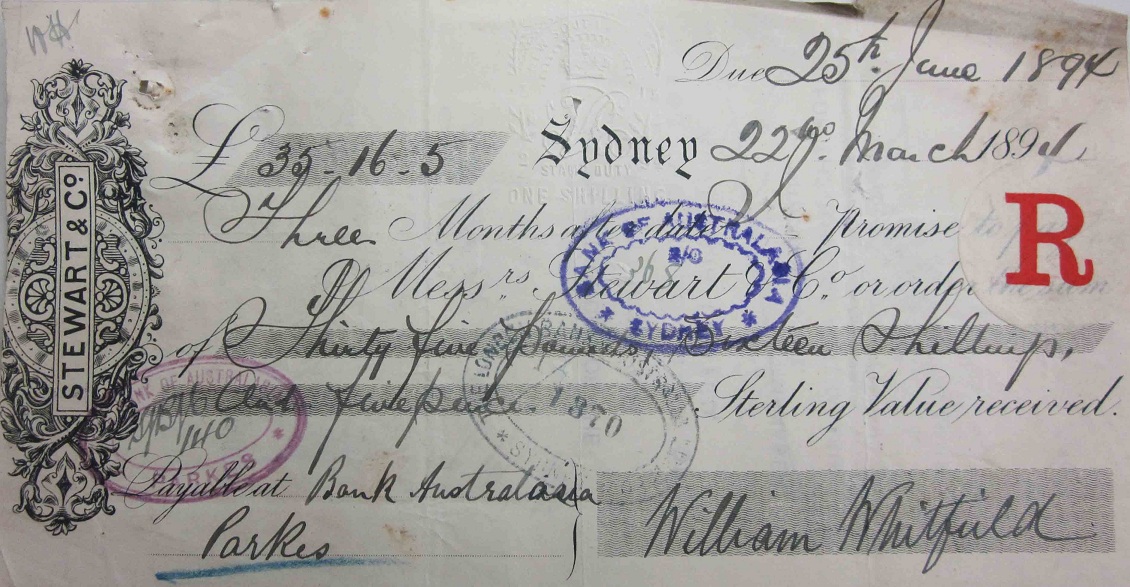
William Whitfield’s 1894 promissory note

Australian immigrants have generally been enterprising but opportunities were always associated with risks which led to economic failure and all the attendant consequences. Some ancestors survived more than one insolvency but others were ruined for life. Insolvency in 1845 did not hinder Thomas Adam‘s building interests in Newcastle and while a subsequent bankruptcy in 1874 through investment in tin mining near Tingha was a setback, he started a profitable saw milling venture at Raymond Terrace.  John Adams was far less fortunate. Being a pioneer of the Alstonville district meant that despite successful clearing of the Big Scrub on his property, sugar growing was in its infancy and processing was primitive and costly. Bankruptcy in 1876 cost him his conditional land purchase. The family fortunes never recovered and a second bankruptcy in 1899 was the last straw. Edward Scrivener, initially a successful draper in George Street Sydney succumbed to economic failure in 1865 and 1869. He never operated his own business again but unlike John Adams’ sons, Edward’s son Frederick Scrivener became a comparatively wealthy man after he moved north to the Richmond River as a storekeeper. Hugh Childs, as a railway construction contractor on the Southern Line, was so mortified that he could not pay his workers in 1863 that he encouraged his sons to become railway employees rather than entrepreneurs. It was advice that sustained the family through the bad times of the 1890s and 1930s Depression. William Whitfield, already a broken man through losing his Pilotage Certificate, escaped his creditors in 1894 by returning to England after the failure of his investment in a Parkes hotel. He died in Hull just six weeks later. His family was left to fend for themselves.

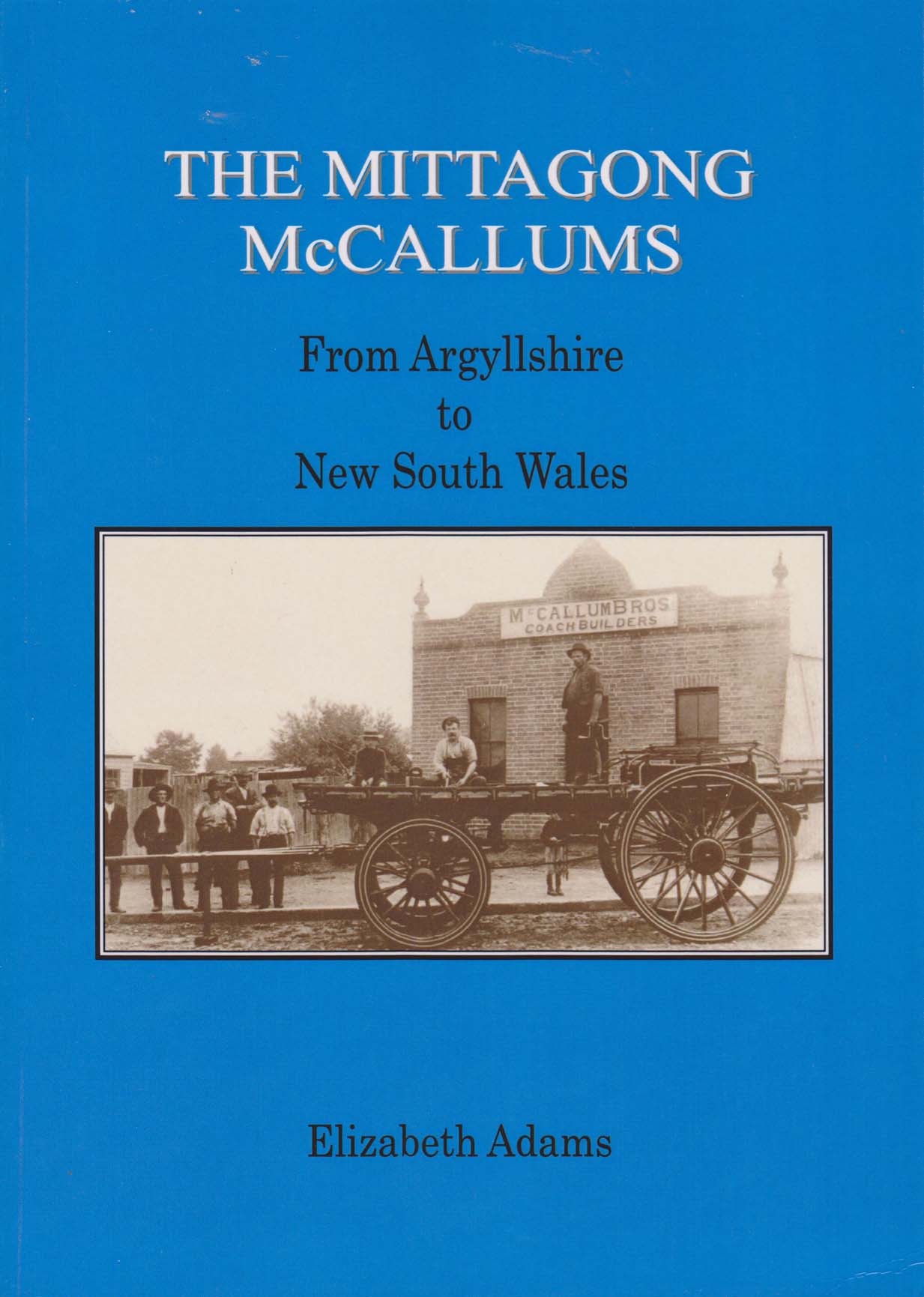
The Mittagong McCallums

From Argyllshire to New South Wales 1776-2004

First published 1997 Second edition 2004

ISBN 0 9578 150 26

Scottish immigrants John and Ann McCallum arrived in NSW as the railway industry was in its infancy. Although John worked in that industry in Glasgow, he established a successful coach building business in Mittagong by the time the Southern Railway reached that fledgling town, providing it with an economic stimulus. Prosperity followed but in time his sons were to find that technology made their trade redundant.  New directions were taken by different branches of the family with varying degrees of opportunity and fulfilment.

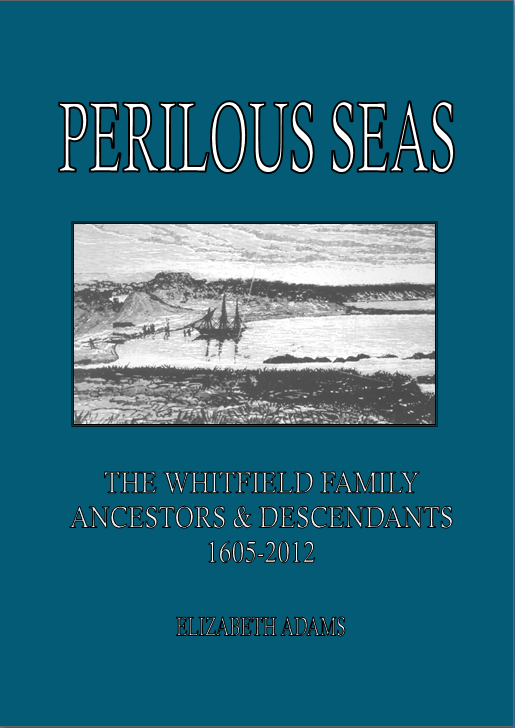
Perilous Seas

The Whitfield Family – Ancestors & Descendants England & Australia 1605-2012

Published 2012

The Whitfield family farmed in the Tyne Valley of Northumberland before moving to iron works on the Derwent River in Cumberland where two daughters drowned in separate accidents. Descendants experienced contrasting fates. One, James Whitfield made a fortune on the Australian goldfields before becoming a successful entrepreneur in Workington. His siblings lived and worked in industrial towns and the youngest, William Whitfield became a master mariner in Australia, experiencing a number of misfortunes before returning to Hull, Yorkshire, leaving his Australian family behind.