
In the opening months of 1877, twenty-five-year-old William Whitfield took command of the Young Australian, a 130-ton three-masted wooden schooner. Built on the shores of Jervis Bay in 1864 and registered out of Brisbane under the ownership of Andrew Muir, she was a seasoned coaster, though by no means an easy charge. On 1 May 1877, deep in the water with 5,452 bags of sugar and 180 casks of rum from the Yengarie Sugar Refinery, she weighed anchor from Maryborough, bound for Port Adelaide.
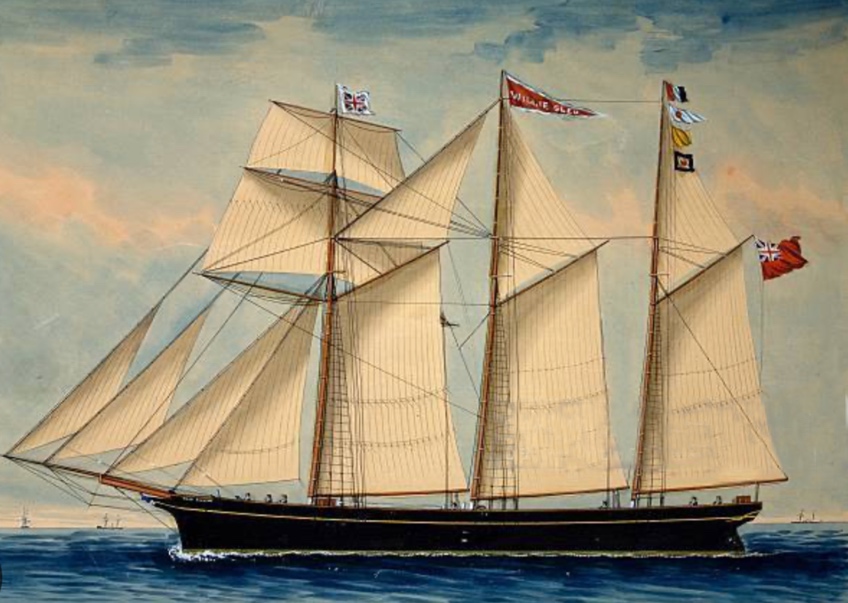
William’s crew reflected the typical polyglot waterfront of colonial Australia: his mate, James Ryans, was a twenty-eight-year-old Scot; his able seamen included Peter Frazer, another Scotsman, and two German mariners, one of whom was thirty-eight-year-old Prussian Frederic Mittay. From the outset, the vessel proved deficient. Caught in a vicious south-easterly blow shortly after clearing Moreton Bay, the schooner sustained severe damage aloft. William was forced to bring her into Port Jackson in distress, where he paid off his Belfast-born cook, Francis Wilson, and shipped William Eltham in his stead.
Having effected makeshift repairs on limited credit, William cleared Sydney Heads on 17 May, running south into the teeth of an impending Southern Ocean gale. By the time the vessel rounded Cape Otway and approached Cape Nelson, near the South Australian border, conditions were appalling. In 1877, the towering stone beacon at Cape Nelson was still two years away from being surveyed; on that pitch-black night, with blinding squalls obliterating all visibility, the crew had no landmark to steer by. Failing to make shelter in Portland, the vessel was struck by an immense sea that nearly drove her down sternmost. Her foremast was sprung, her rigging crippled, and William was forced to turn east and run before the wind, desperately cutting away fouled lines to prevent the spars from beating through the hull.
Compounding the peril, William possessed no chronometer on board. He was compelled to navigate by dead reckoning alone—a perilous venture on a shore where current and leeway could fling a vessel miles off course. More than seven hundred vessels lie broken along the Shipwreck Coast between Moonlight Head and Port Fairy; Matthew Flinders had soberly recorded decades earlier that he had never surveyed ‘a more fearful section of coastline’.
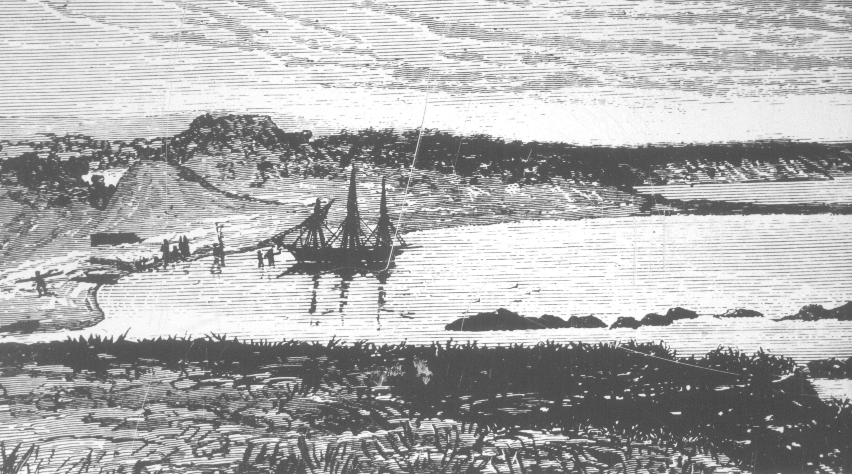
By 27 May, driven relentlessly toward the cliffs near Curdies Inlet, William faced imminent destruction. In a display of extraordinary nerve, the young captain clambered high into the swaying, damaged rigging. From his precarious perch aloft, shouting orders down through the gale, he conned the helmsman through an intricate, boiling channel in the outer reef—the very reef that had claimed James Baines’s celebrated clipper Schomberg in 1855.
Though he threaded the reef, the schooner was trapped in the breakers. Grounding two hundred yards off the mouth of the inlet, the ship shuddered violently under the rollers. In the frantic attempt to secure a lifeline to the shore, helmsman William Eltham was swept away by the undertow and drowned; his body was never recovered. Guided by six or seven local settlers who had hurried to the beach, the remaining crew hauled themselves through the surf along a line. True to the traditions of the merchant service, William Whitfield was the last man to abandon the ship, stepping off only when her hold was flooded and her hull irrevocably settled into the sands.
William camped beside the wreck until insurance assessors arrived, overseeing the salvage and subsequent auction by Greig & Murray in Melbourne: 138 hogsheads and 42 casks of Queensland rum, along with 5,600 mats of saturated sugar, against an insured hull value of £2,000. He then travelled to Melbourne aboard the coastal steamer Otway to face the Melbourne Steam Navigation Board at the Custom House.
Public opinion was initially firmly in his favour. The Warrnambool Standard remarked admiringly that ‘in directing that the vessel should be steered for a narrow opening in the reef, the captain, who directed the steering from the rigging, showed coolness and judgement, otherwise his own life and those of his men would doubtless have been sacrificed.’ Yet the Marine Board took a harder line, charging Whitfield with a wrongful act in proceeding to sea knowing the vessel possessed defective gear and insufficient equipment.
Facing the ruin of his career and the suspension of his master’s certificate, William pleaded penury: he had telegraphed Andrew Muir in Brisbane repeatedly for funds to refit the vessel properly, but had received nothing. On 23 June 1877, his solicitor, Mr Stewart, launched a devastating legal assault on the proceedings. Stewart demonstrated that because the English Merchant Shipping Act amendments championed by Samuel Plimsoll had not yet been enacted into Victorian colonial statute, the Marine Board possessed no jurisdiction to hold a master criminally liable for unseaworthy conditions imposed upon him by distant, parsimonious owners.
The bench had no answer. Within fifteen minutes, the court conceded the point of law, exonerated Captain Whitfield, and returned his certificate. The outcome triggered blistering editorials in The Age and the Port Phillip Herald, condemning colonial legislative inertia that permitted ‘coffin ships’ to sail with impunity. For William Whitfield, exoneration was an essential professional vindication, yet the memory of Curdies Inlet—and the drowned helmsman he could not save—would remain an indelible shadow across his seafaring career.