
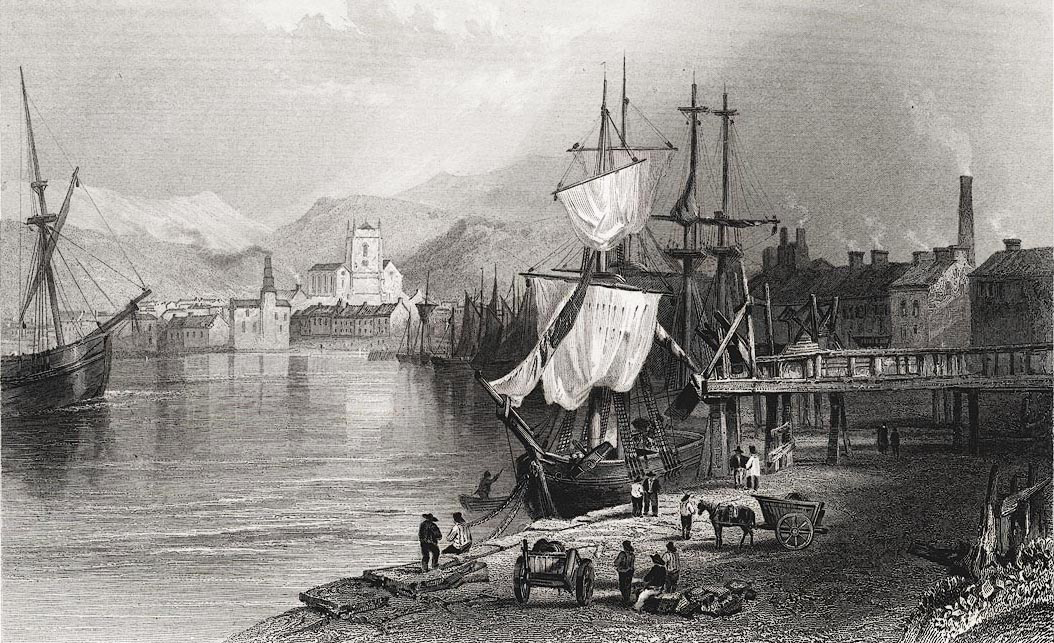
On 18 April 1851, in the humble settlement of Barepot—an industrial village nestled beside the Seaton Iron Works on the banks of Cumberland’s River Derwent—Mary Whitfield, née Beeby, gave birth to her son William. Her husband, John Whitfield, registered the birth at Cockermouth on 6 May, recording his occupation simply as ‘labourer’. Two months later, on 22 June, the infant was carried to the ancient parish church of Saint Michael in Workington for baptism. With ten children beneath their roof, John and Mary Whitfield endured a crowded, hardscrabble existence, yet several of their brood attained a commendable standard of literacy. For young William, that early schooling would later prove indispensable when navigating the responsibilities of a master mariner.
Domestic security proved fleeting. In January 1854, when William was not quite three years old, his mother died. The loss reverberated through the boy’s entire life. Decades later, a medical clerk recording his physical description noted a poignant emblem indelibly pricked into the skin of his forearm: a tomb sheltered by a drooping willow, bearing the inscription ‘In Memory of my Mother’ (Sculcoates Asylum Records, Case History No. 2928, Hull Archives). For a motherless toddler growing up in Barepot, grief was accompanied by acute privation as John Whitfield struggled to raise the surviving children alone.
Misfortune fell upon the family in cruel succession. Within two years of Mary’s passing, two of William’s sisters drowned in separate tragedies. Then, in 1861, John Whitfield suffered a fatal industrial accident at the iron works. At just nine years old, William was an orphan, cast upon the kindness and resources of his eldest brother, James Whitfield.
James had recently returned to Workington after trying his luck with considerable success on the Victorian goldfields during the 1850s. Enterprising and astute, James stepped forward as the family’s anchor, providing financial support and guidance to his younger siblings. His colourful accounts of life at the antipodes must have cast a long shadow over young William’s imagination. Yet survival in Workington demanded immediate labour. The Seaton Iron Works had closed its furnaces when William was eight, driving local workers downriver toward the expanding harbour, scarcely a mile from Barepot. Through the maritime connections of James’s father-in-law, a local mariner named James Brown, young William likely secured a berth as an ordinary seaman in the brisk coastal coal and iron trade.
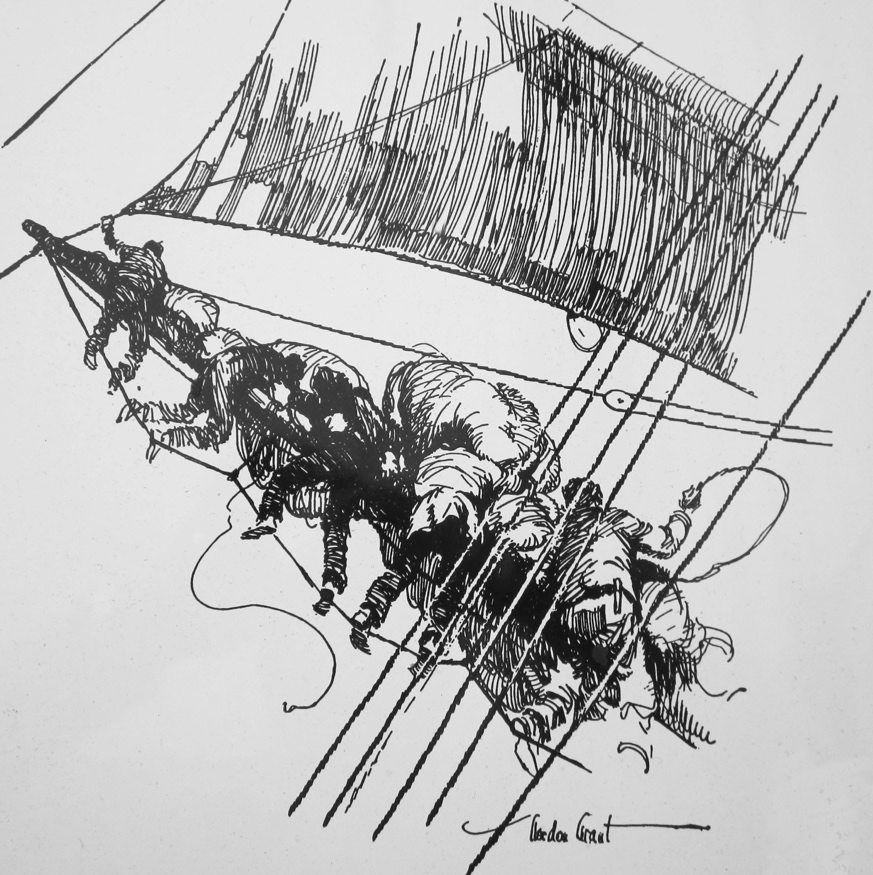
Victorian merchant seafaring was a profession shorn of romance. While landsmen marveled at the symmetry and grace of tall ships under full canvas, life before the mast was squalid, precarious, and exhausting. Quarters in the forecastle were cramped and perpetually damp; weary hands snatched brief watches below, sleeping fully clothed in wet oilskins upon sodden straw mattresses. On deck, youths were driven aloft in biting gales to fist canvas on icy yardarms, ever mindful of shifting coal cargoes, dismasting, rogue swells, and intemperate skippers. The rations were notoriously foul—weevily hardtack and brined salt beef—and wages offered scant reward for constant physical jeopardy.
Yet for a boy with few prospects in industrial Cumberland, the sea was an avenue to the wider world. Following his brother’s footsteps, William eventually engaged on an ocean-going vessel bound for the Australian colonies. When his nephew Joseph John Whitfield provided evidence following William’s death in 1894, he recalled that his uncle had lived in Australia for ’28 years’—placing his arrival on colonial shores around 1866. Just fifteen years old, the Barepot orphan stepped ashore beneath southern skies, embarking upon a long and turbulent career on Australian waters.