
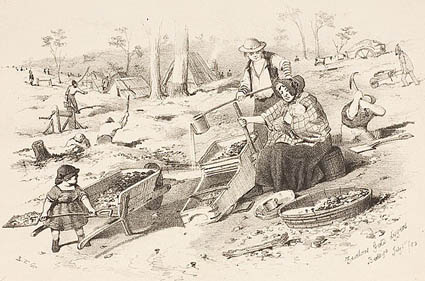
 Thomas Holmes suffered from gold fever. Taking his young family from Hexham, NSW to California in 1849 proved a trial and a disappointment. On his return, he soon headed for the new goldfields in Victoria with no more luck, unlike James Whitfield who arrived from Workington, England in 1857 and made a small fortune. It provided the nucleus of his future wealth from his Workington enterprises. Cephus Scrivener made enough money from the Victorian diggings to travel round the world in style but gold fever took him to Thames, New Zealand and cost him the life of his wife and first son.
Duthie Updates
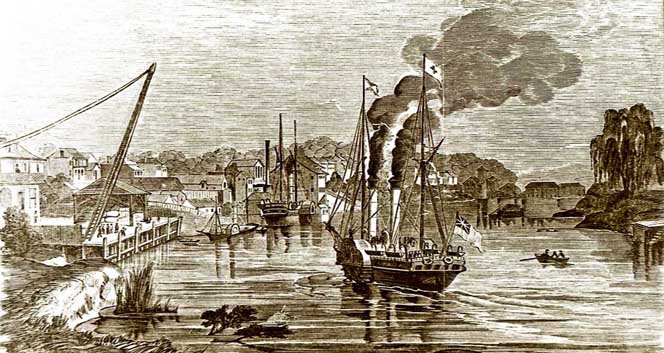
Cultural Collections, Auchmuty Library, the University of Newcastle, Australia
In 1854 William Duthie sold his schooner ‘Gem’ to William Heugh, a West Maitland merchant. In 1856 he married Agnes Scobie, a niece of the Maitland merchant, not his cousin, as stated on page 44 of ‘The Duthie Saga’. Agnes’ mother Elizabeth was William Heugh’s sister. As well as being a successful merchant and ship owner, William Heugh owned a flour mill, a bacon factory, a tobacco factory, a timber depot and soap and candle factories at Stockton, Morpeth and West Maitland. That same produce was shipped in ‘Gem’ to Melbourne under the command of William and his brother Findlay Duthie as was red cedar from the Richmond River. Trading in cedar led Heugh to establish a hardware store at Ballina and a timber camp at Emigrant Creek. From 1857, the new railway line from Newcastle to Maitland took business away from the Morpeth merchants at the head of navigation on the Hunter River. Coupled with the disastrous Hunter River floods of 1857 and 1863, William suffered heavy financial losses, leading to the sale of his property and ships including the Duthie’s ‘Gem’. He relocated his family to 600 acres at Pimlico on the Richmond River in 1864.
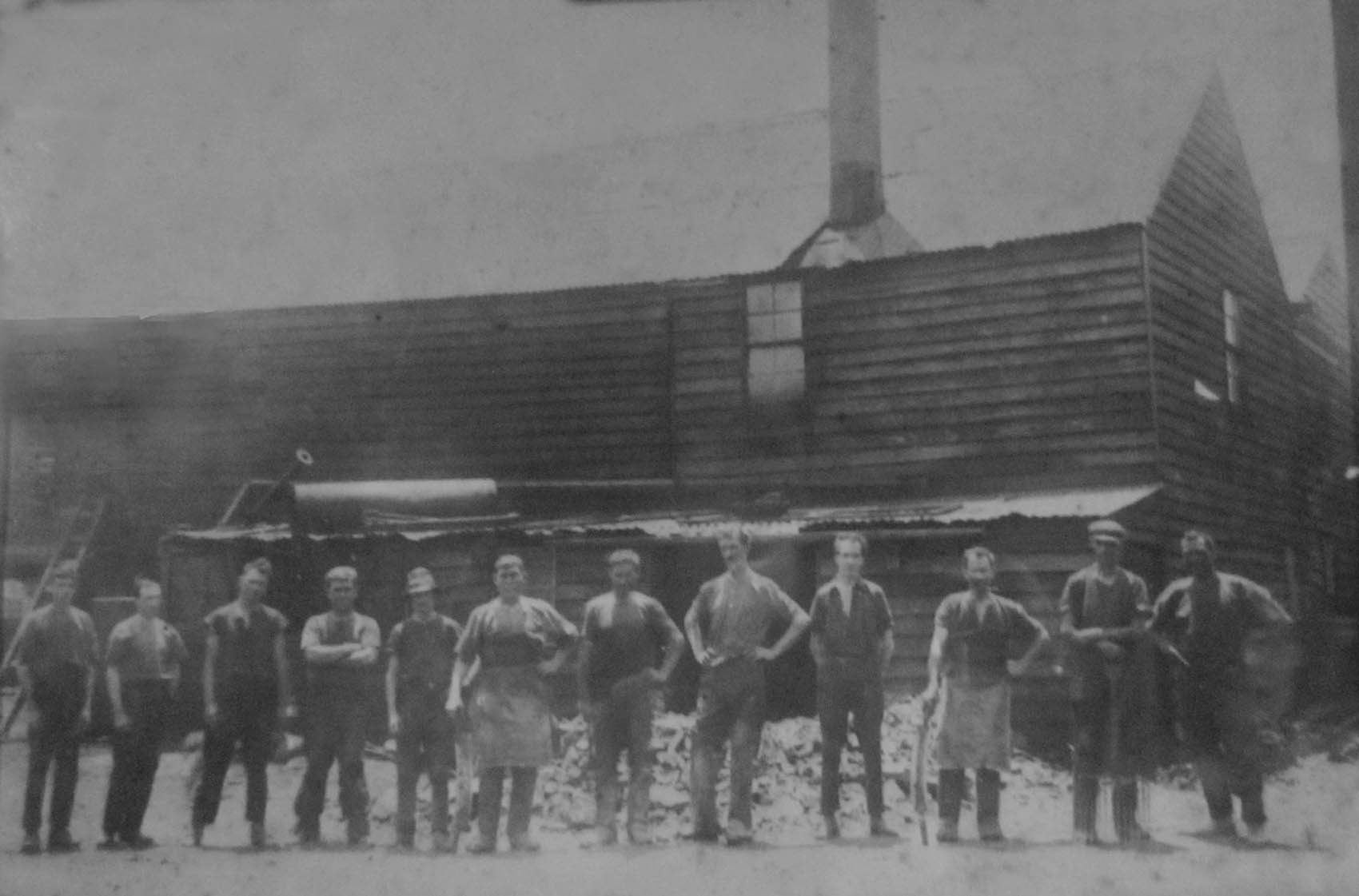
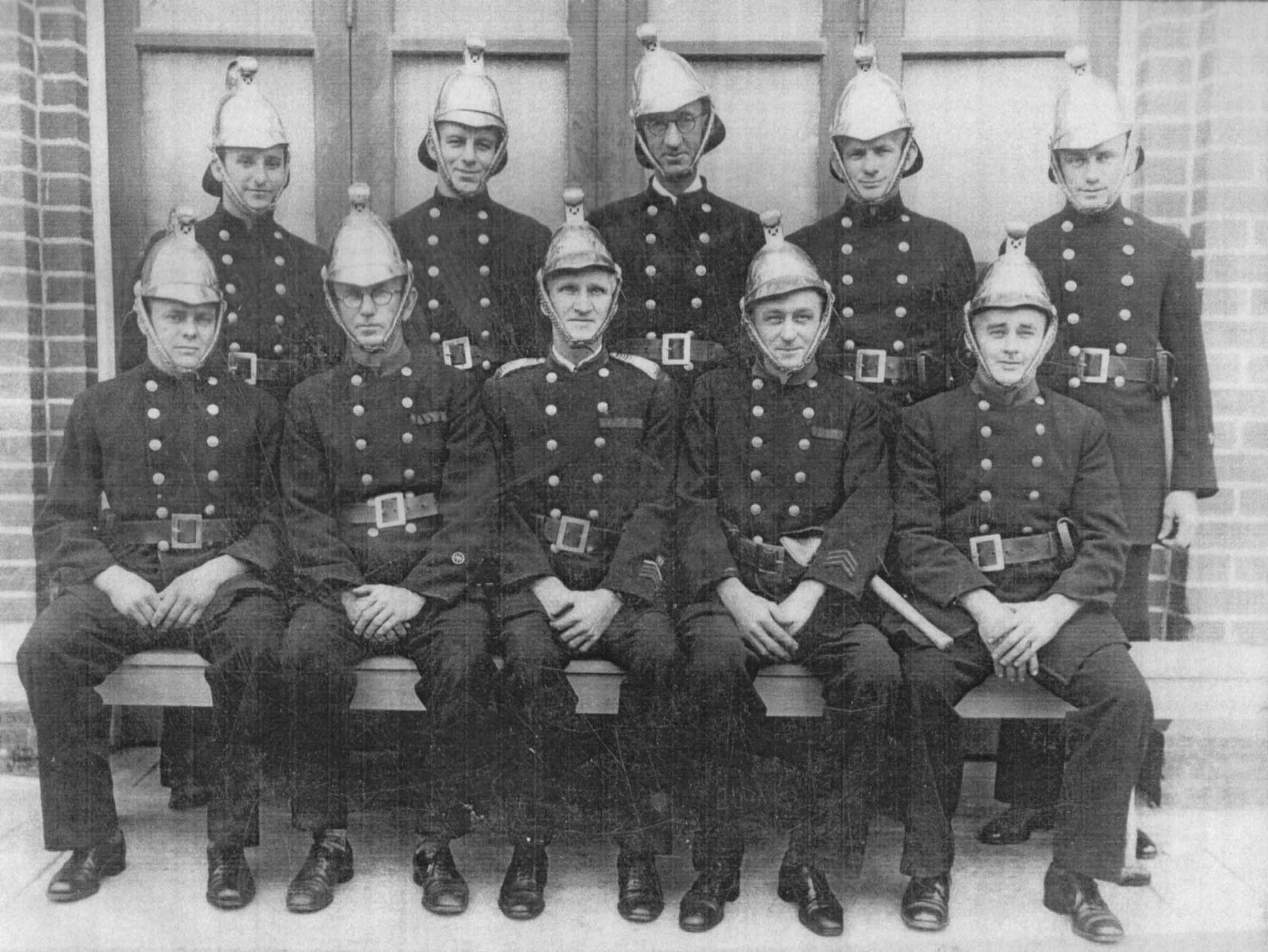
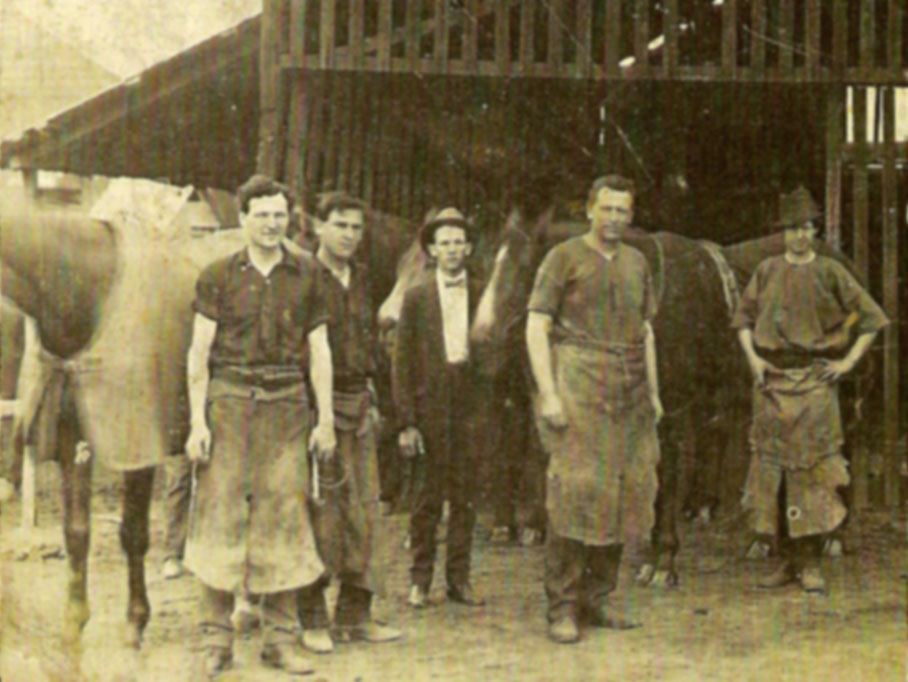
Men at Work
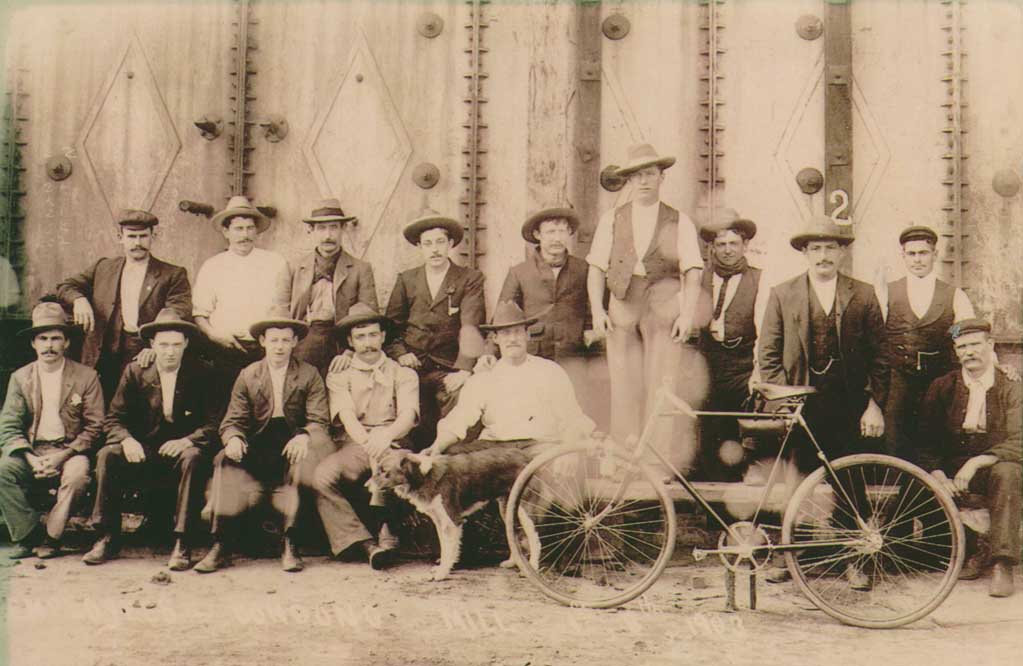
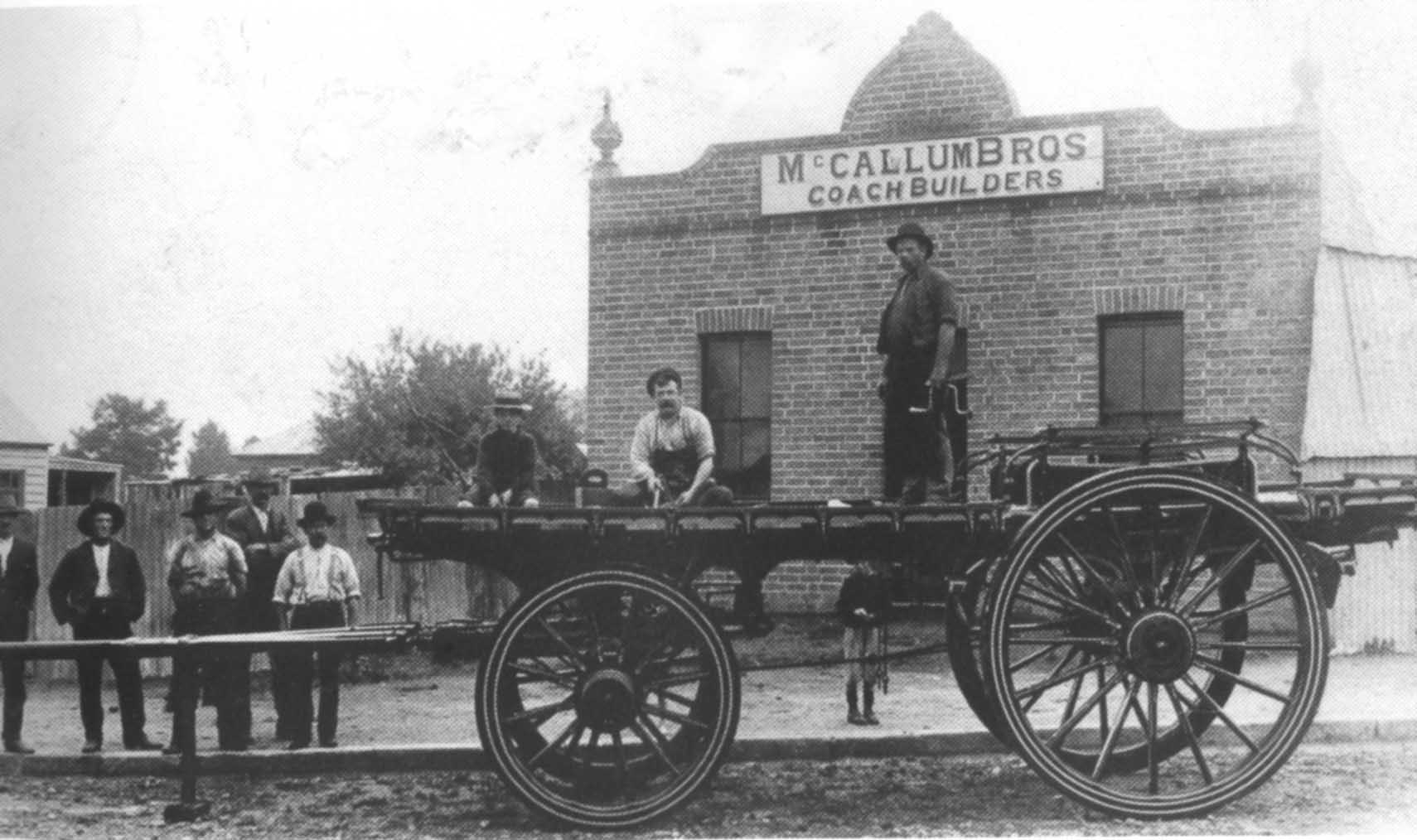
Pride is evident in these early 20th C photos taken in the workplace in rural NSW and at Botany in Sydney
Moving the Goods
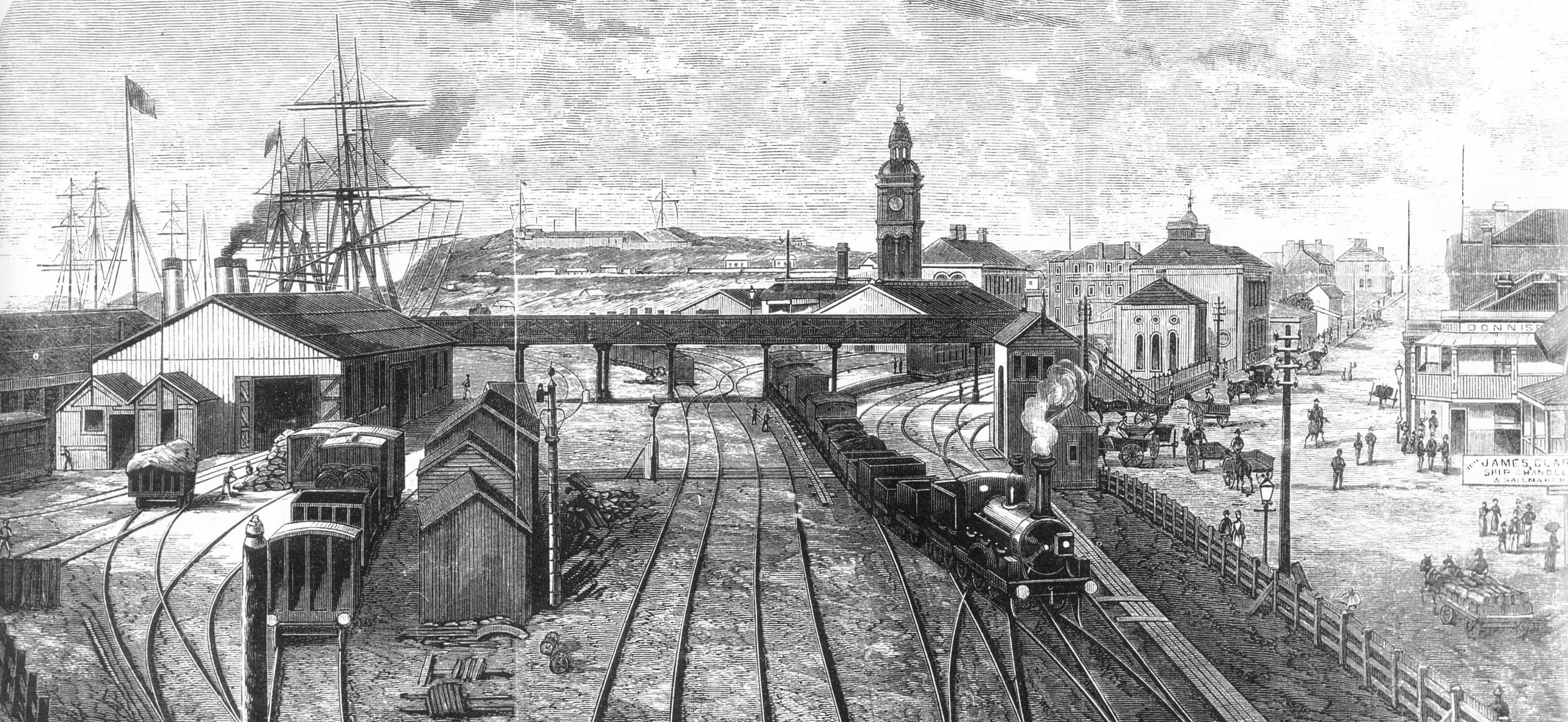
At the core of any economic system is the transfer of goods and availability of labour. Our ancestors played their part in developing colonial Australia where great distances and difficult terrain limited apparent boundless opportunities. Duthie, Whitfield and Montgomery ancestors sailed and piloted ships which carried goods to Australia and in the coastal trade. Some constructed vessels in Newcastle and Port Melbourne and several ran vehicular ferries on major rivers. In the vital railway industry, Childs, Rumble, Adam, Boyd, Adams, Whitfield, Campbell and Scrivener men laid the iron rails, drove the locomotives, were engineers in railway workshops, carriage builders, guards, signallers, station masters and worked in the Enfield and Darling Harbour goods yards as well as locomotive construction (such as 3801) at Everleigh in Sydney. The McCallums built the drays and other horse drawn vehicles that connected people with the railways and ports. Campbells and McAllisters were carriers in the horse drawn transport era in Queensland and northern NSW. Men of the McCallum, Scrivener and Campbell families, shod horses and manufactured goods and vital components for vehicles. All contributed to the national as well as their local economies.
Scottish Forbears
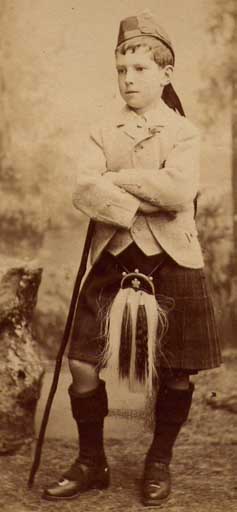
Economic and social conditions led our Scottish forbears to join the mass exodus of Scots in the 19th century, mostly as families but sometimes alone. Influenced by the promises of John Dunmore Lang, some were assisted migrants; others made their own way. For some, the decision to migrate brought security and even wealth; for others at least improved circumstances despite their constant struggles. With them came their Scottish heritage.
First to leave in 1838 was a lowlander, Thomas Adam, a well educated cabinet maker, who could see no future in Kilmarnock where opportunities for his class were rare. A number of ancestors left Scotland in the 1850s, some escaping the slums of Glasgow and Paisley after they moved there to work in industries. They include a coach builder from Argyllshire, John McCallum, his wife Ann McArthur, their three children (1860), Archibald Campbell and his wife Mary Elliott (1855) as well as his parents Hugh Campbell and Ellen Gilmore (1863). The Campbells had left their agricultural life in County Tyrone to work in the Paisley cotton mills. They were not the only ancestors from Ulster who identified as Scots in NSW. John McAllister and Jennett White (1856) from County Antrim, like the Campbells, became pioneers near Tenterfield; William Adams and Mary Ann McIntyre hailed from Donegal (1838).
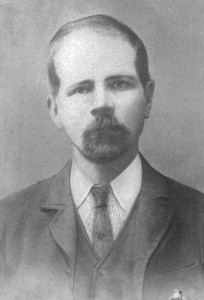
Findlay Duthie, a Scottish mariner from Aberdeen, sailed to Melbourne with his brother on their ship ‘Gem’ (1853). The last of the Scottish ancestors to arrive were a mariner John Montgomery, his wife Sarah Stevenson (1885) who also saw the promise of a better life for their four children than they had experienced. David Stevenson, a coal miner in the impoverished towns of Ayrshire died young, leaving Sarah’s mother Sarah Stobo, struggling to support her daughters as a muslin sewer in Irvine.
Hard Labour
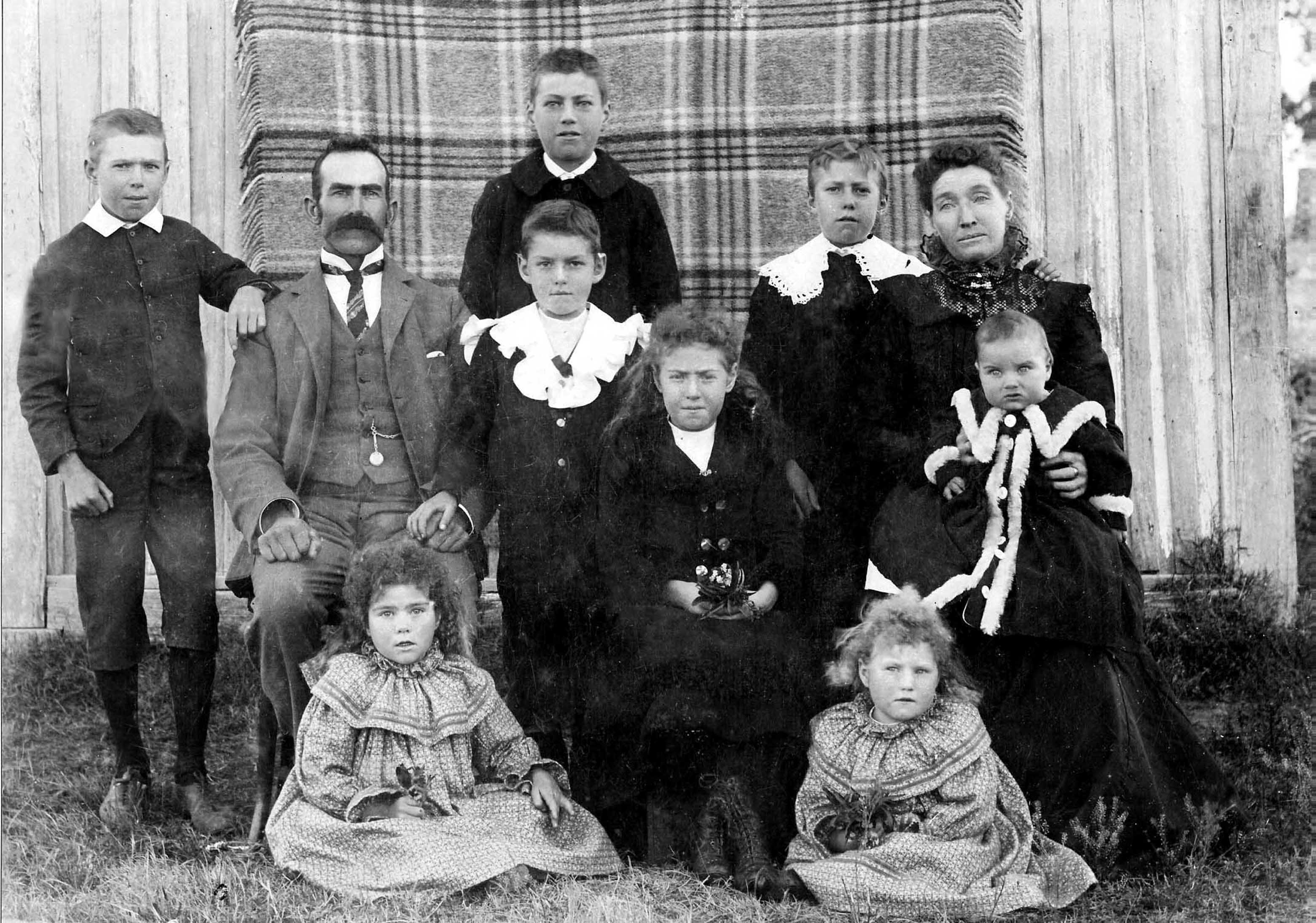
Women as well as men faced hard physical work daily with few devices to limit their pain. Servants were not available, even for more affluent women who did the daily grind, assisted only by their daughters. Rural women worked on the farm as well as in the house and were distant from all amenities. They made clothes and furnishings, butter, bread, and jam in additional to their other household chores. The face of Jeanette Campbell (nee McAllister) shows the toll on young women with large families. She was 36 years old and would have two more children after this photo was taken in 1901 on their Bryan’s Gap property near Tenterfield, New South Wales. Her children learnt music at home as well as Scottish highland dancing. Her role model, mother Jennett McAllister, widowed at 39, was remarkable for her time. She had nine children, ran the house and property, bought and sold produce and livestock, educated her children and was a competent horsewoman. Her surviving sons, renowned for their horsemanship learnt on the family property in the Mole Valley, went on to military careers.
Red Gold
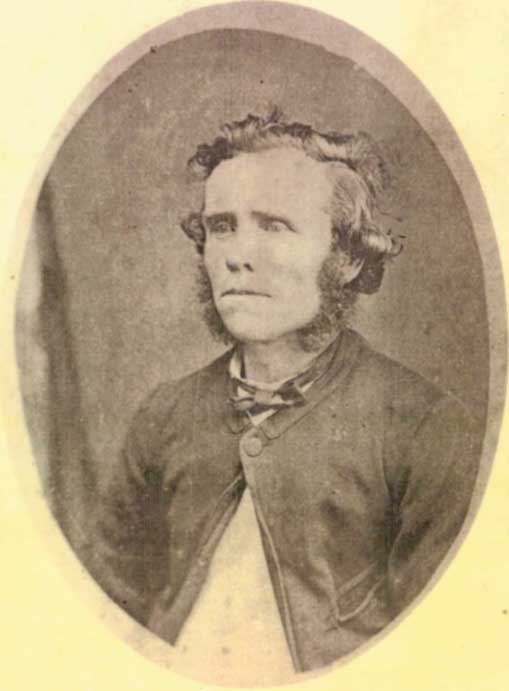
Australian red cedar was abundant in the sub tropical rainforests of northern NSW. Used in grand homes as a building material and for colonial furniture, the beautiful timber was gold for the early Richmond River cedar cutters such as Benjamin Edwards. Having left the cotton mills of Bristol and worked as a stockman, Benjamin turned to the more lucrative cedar trade, earning enough to purchase the first block of land sold at Lismore in 1856 and later, land at Gundurimba. Findlay Duthie, master of the schooner ‘Gem’, transported cedar, possibly even timber cut by Benjamin, to Sydney and Melbourne from the Richmond River from 1855, one consignment amounting to 58 000 feet of cedar logs. William Whitfield in command of ‘Scout’, carried timber from the Tweed, Richmond and Brunswick Rivers to the South Brisbane Sawmill in the late 1880s.
Aboriginal Encounters
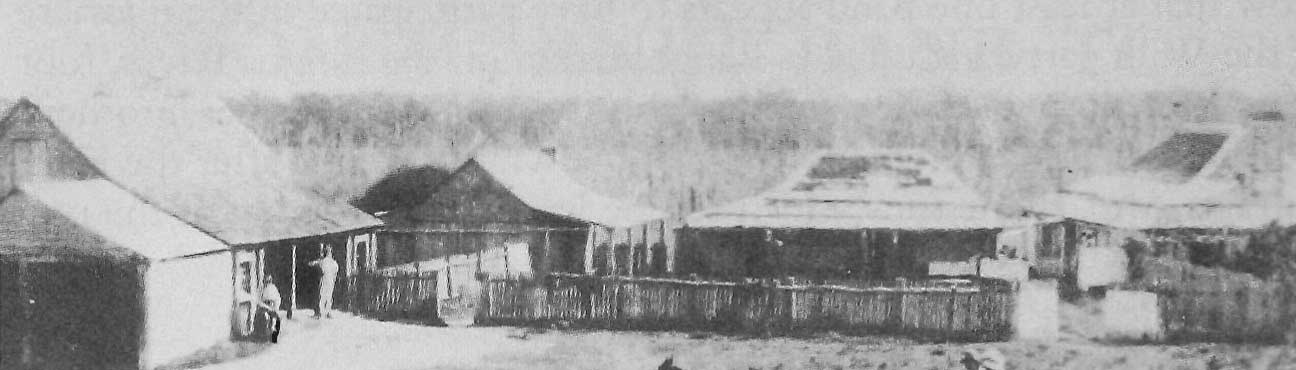
A shadow is cast over our family history through the discovery of some frontier encounters. While some incidents were positive, one displays ferocity and a mentality lacking in compassion. All reflect the inevitable triumph of the invaders and the dispossession and degradation of the aboriginal people. In the 1840s and 1850s, Thomas Adam is reputed to have had good relations with Awakabal aboriginals in the Newcastle and Lake Macquarie district. They guarded his boat building equipment when he left the Warner’s Bay area to return to Newcastle and in Newcastle he sheltered them at his home on Bullock Island after sailors plied them with rum on blanket distribution days. In 1852 Benjamin Edwards was a stockman on ‘Wyangerie’ below the Tweed Ranges. Armed with a gun and ‘large mastiff dog’, his wife Louisa Edwards, in defence of her son, her own life and their home against an ‘attack by a mob of blacks’, left at least one aboriginal woman dead. Benjamin, in retaliation, ‘cleaned out the blacks’ camp on Lynch’s Creek with a stockwhip’. Locally, Louisa was cast as a heroine and her wound from a boomerang was seen as a badge of courage. On his trek north to the Dawson River Valley in Queensland, Archibald Campbell was armed and apprehensive of an aboriginal attack in the wake of the horrendous Hornet Bank Massacre of 1857. At Wyrallah, Frederick Scrivener dispensed flour to the aborigines from his general store and the family shared Christmas meals with local aborigines in the 1930s, albeit on the steps of their house. However in an advertisement for a Wyrallah Sports Day, inserted by Frederick in the ‘Northern Star’ in 1902, aboriginals were ‘debarred’ from competing. The children of John Adams played and wandered the district with aboriginal children at Alstonville but their mother Mary Ann Adams in fear of attack, reputedly kept a shotgun handy. Kindness to the Cambewarra aboriginals was shown by John Adams’ sister Jane Camps who sheltered an aboriginal man in her farm house during a storm and was later rewarded with a broom made from cabbage tree palms, ‘bound with supple vines’.
Establishing Schools
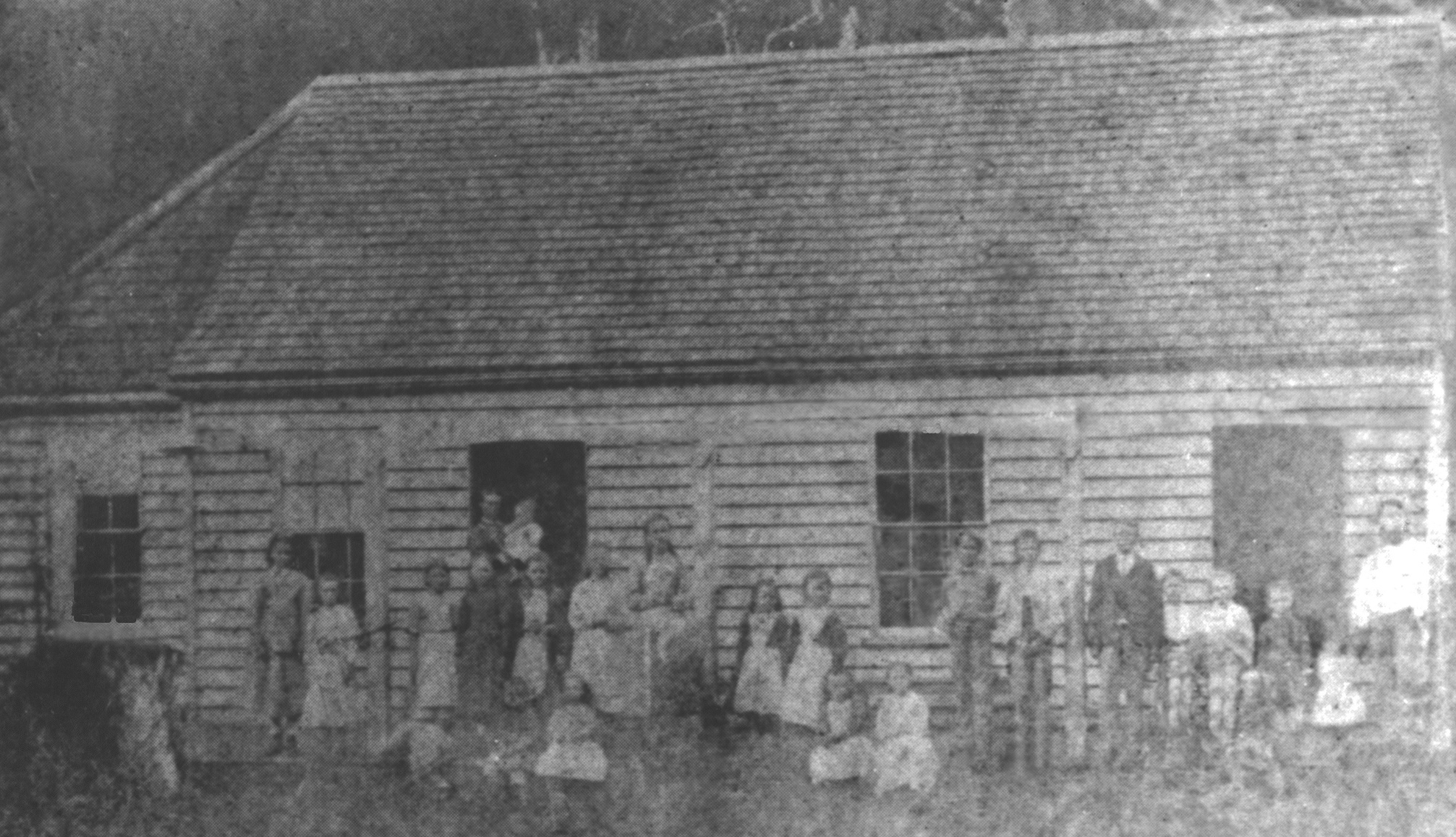
Advantaged by literacy and with an understanding of the value of education, our pioneering ancestors were prominent in supporting education in their communities. In time, a number of their descendants became teachers. Thomas Adam as a patron helped to establish the first non-vested school in Newcastle in 1857 when there were only 62 in NSW. He was Secretary of the local school board from 1858 and shared personal responsibility for accumulated debts when the first National School was completed in 1862. In 1872, John Adams and his neighbours petitioned for a National School at Alstonville. He cleared the land and with John Perry, contracted to build the school which was completed in 1874. Close by, Benjamin Edwards was a member of the Gundurimba local school board from 1874 and Frederick Scrivener was a trustee of the School of Arts site. In Mittagong, Hugh Childs, a local magistrate was also chairman of the school board and vice-president of the School of Arts. Jennett McAllister, like other pioneers in the family, successfully educated her own children on her isolated Mole River property.
Accidental Deaths
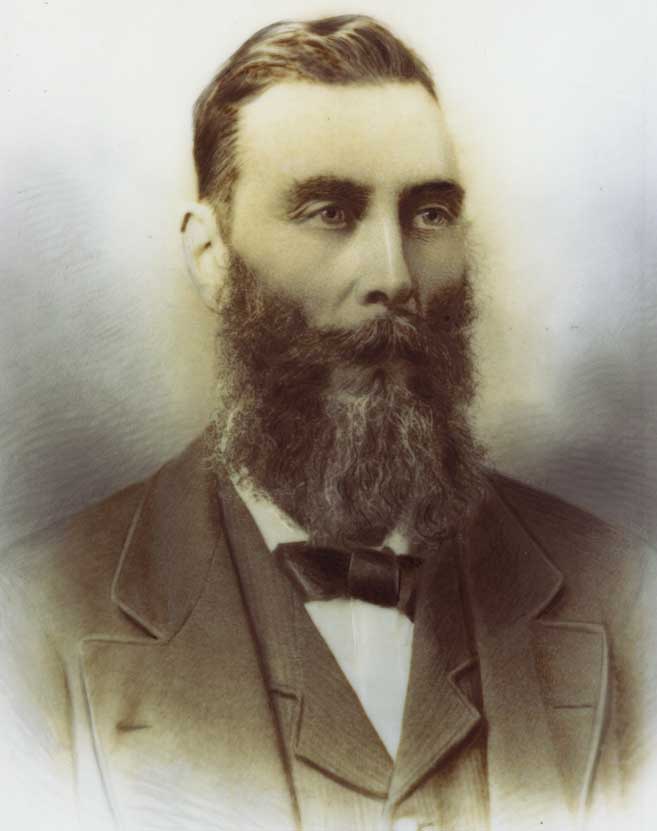
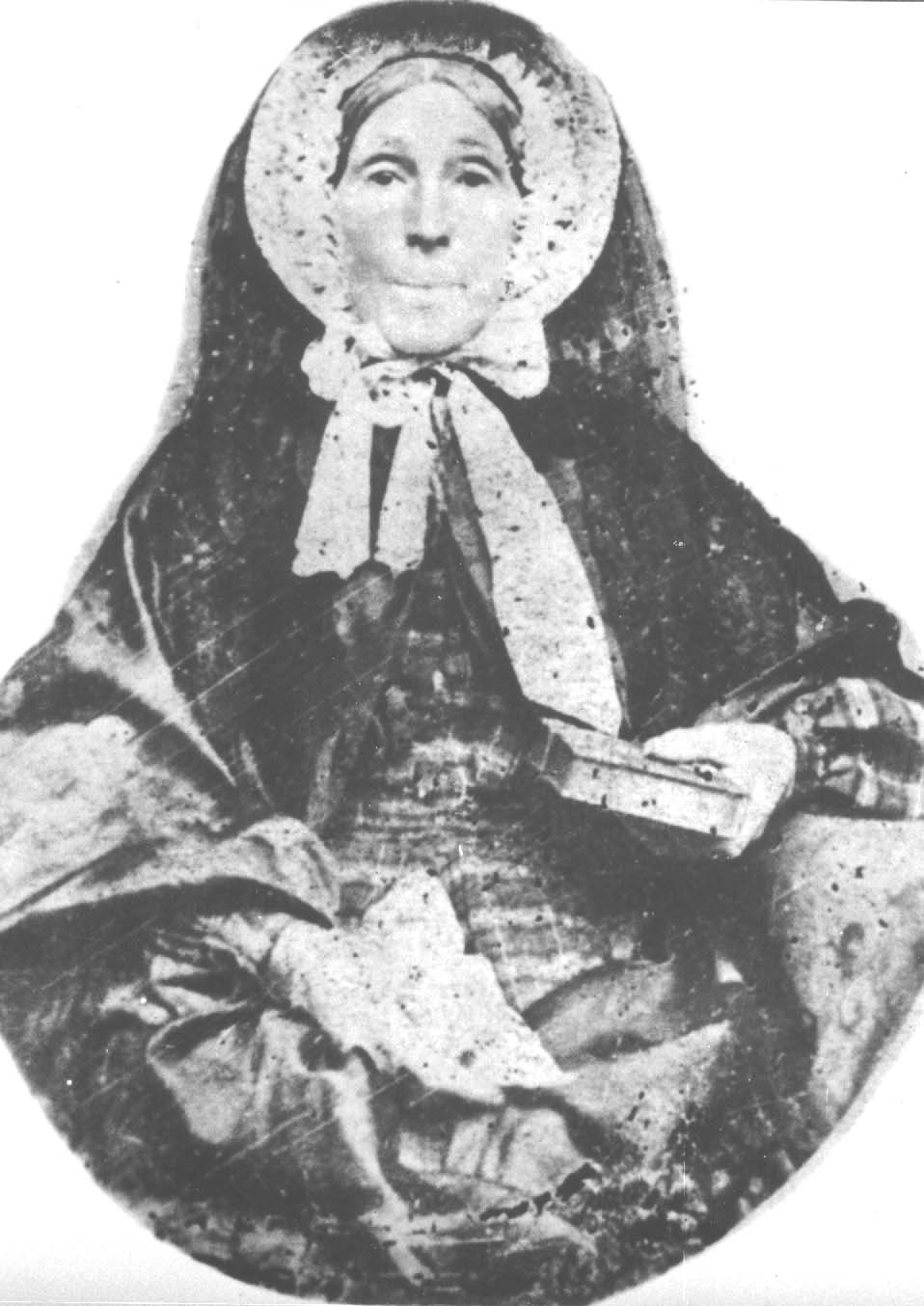
Jane and Margaret, two sisters of William Whitfield drowned in the Derwent River at Workington, England in 1854 and 1856. John Rumble, working on constructing the new railway line between Liverpool and Campbelltown, died in an horrific accident in 1858. A railway worker failed to signal an approaching train. Two trucks were derailed and with a load of sleepers, John fell to his death. Mary Ann Adams (nee McIntyre) fell into the kitchen fire while boiling water for tea at her Cambewarra home in 1870. Her son John Adams was killed when a winch handle struck his head after a CSR barge fouled the line of the ferry he was operating on the Richmond River near the Broadwater Mill. Other accidents were prolific and even serious but not fatal.